
What Is the Best Cat Litter for Ammonia Smell?
The best cat litter for ammonia smell is a fast-clumping, highly absorbent litter that traps urine in a solid clump you can remove daily. Ammonia forms when bacteria break down the urea in cat urine. The less time urine sits loose in the tray, the less ammonia is produced. That is why scooping a tight-clumping litter once or twice a day controls odor better than any fragrance.
The four features that matter most:
- Fast, firm clumping so urine is locked away and removed, not left to spread.
- High absorption so liquid does not pool at the base of the tray.
- Low dust and no heavy perfume, which cats can find off-putting.
- The right quantity for your household, so you can keep a 5-8 cm (2-3 inch) depth and top up without running out.
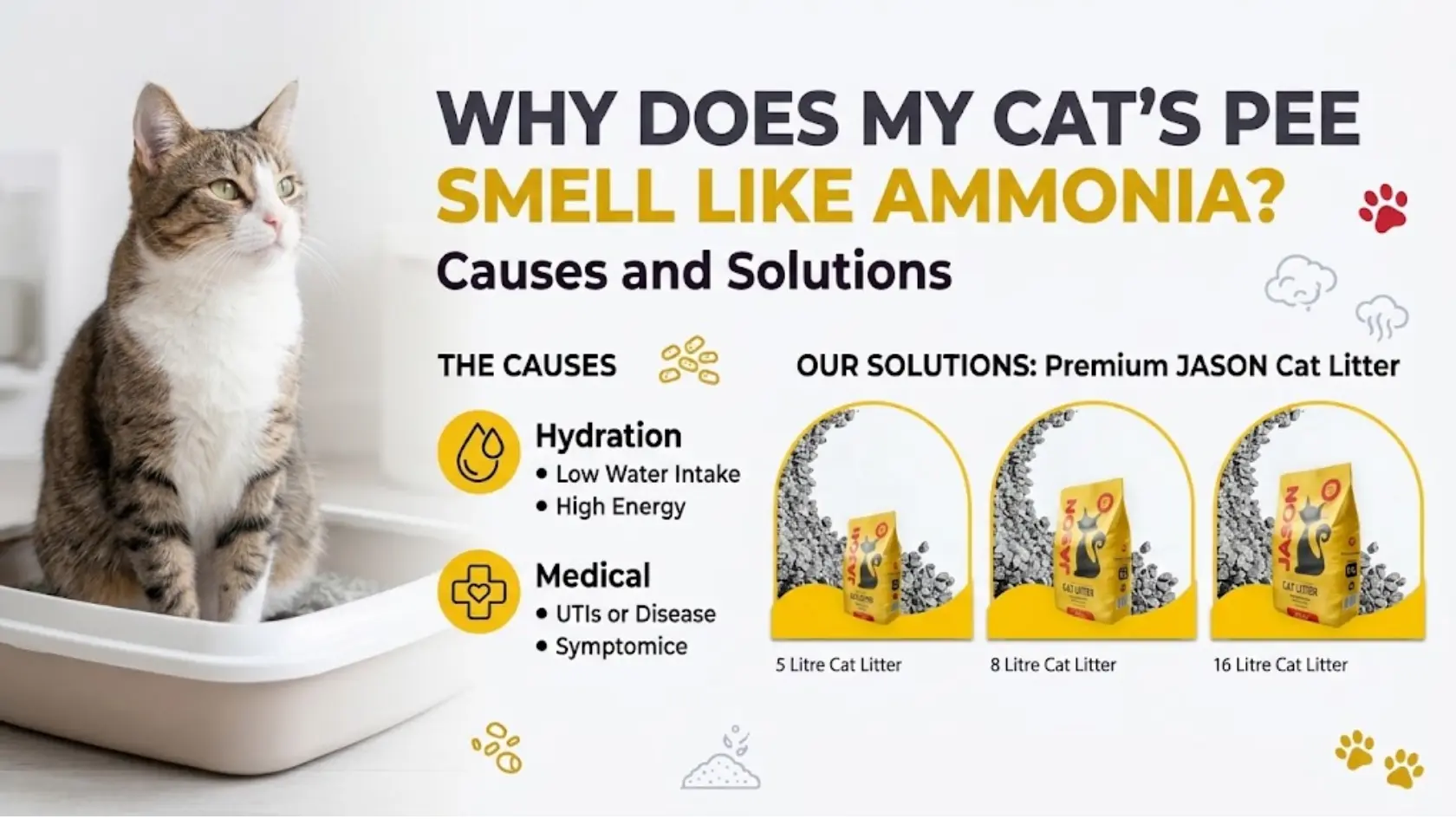
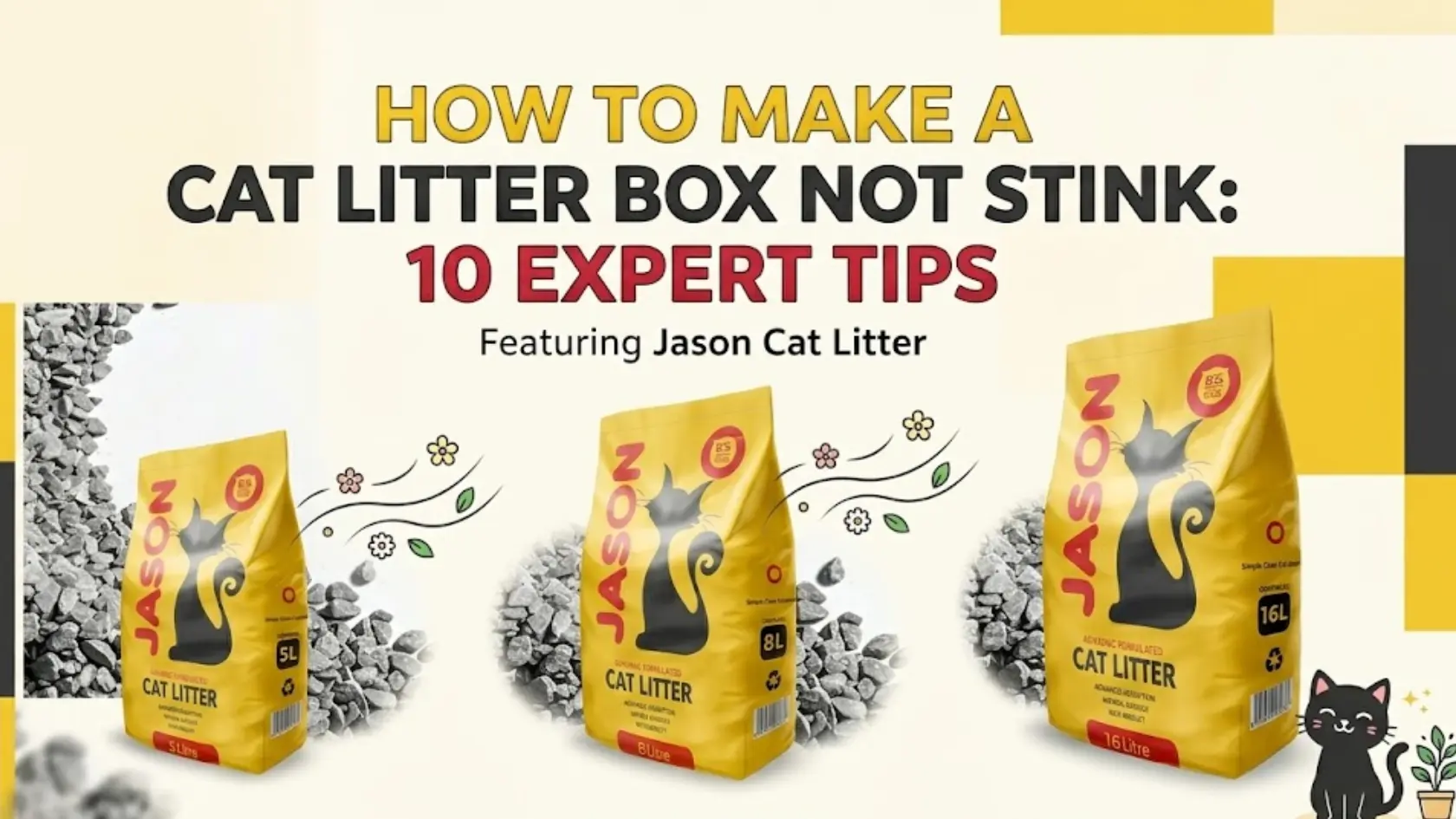
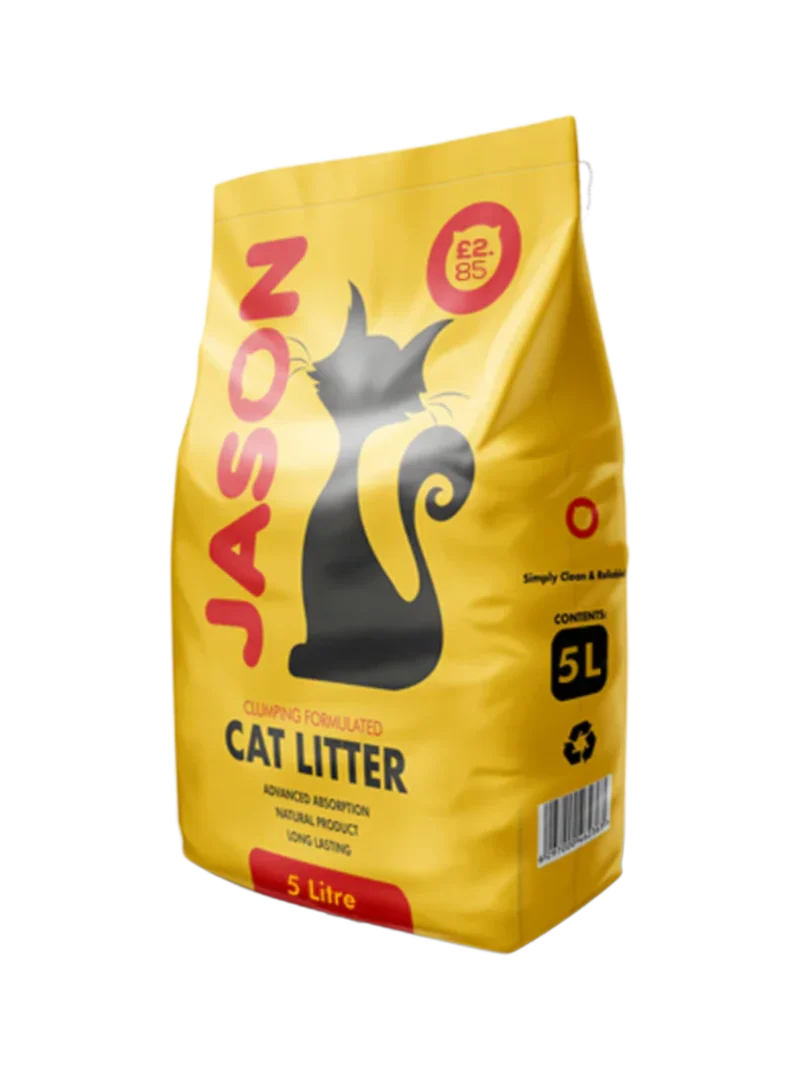
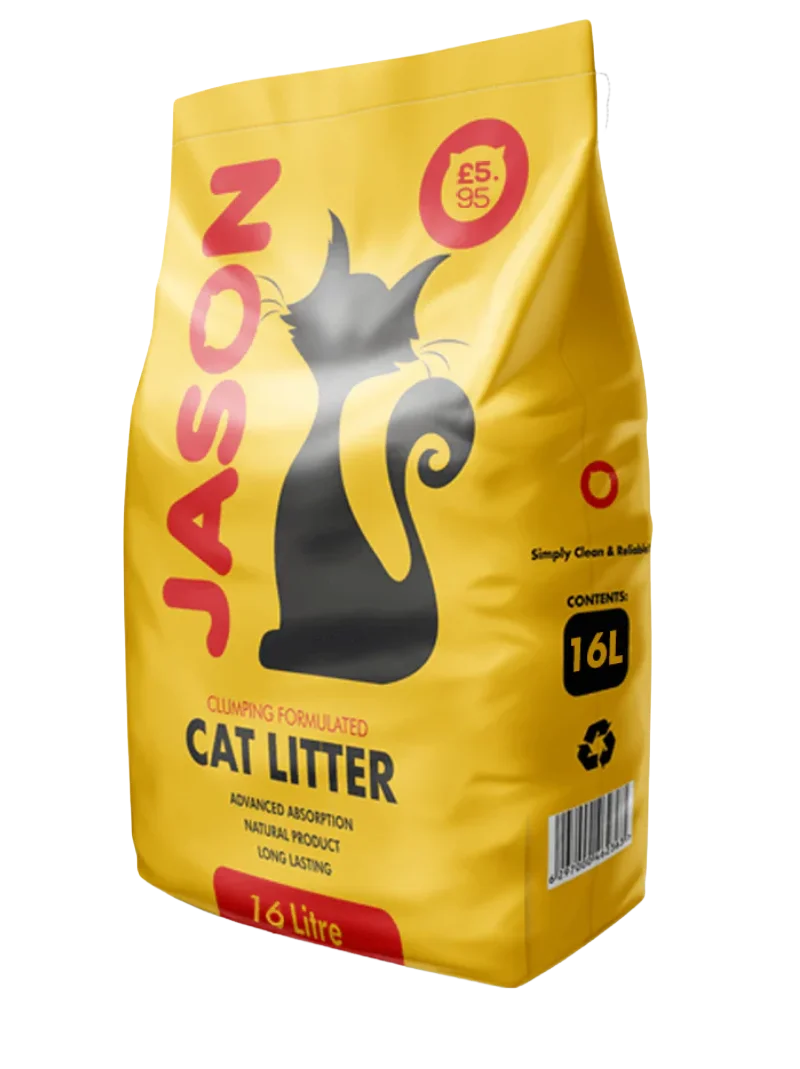
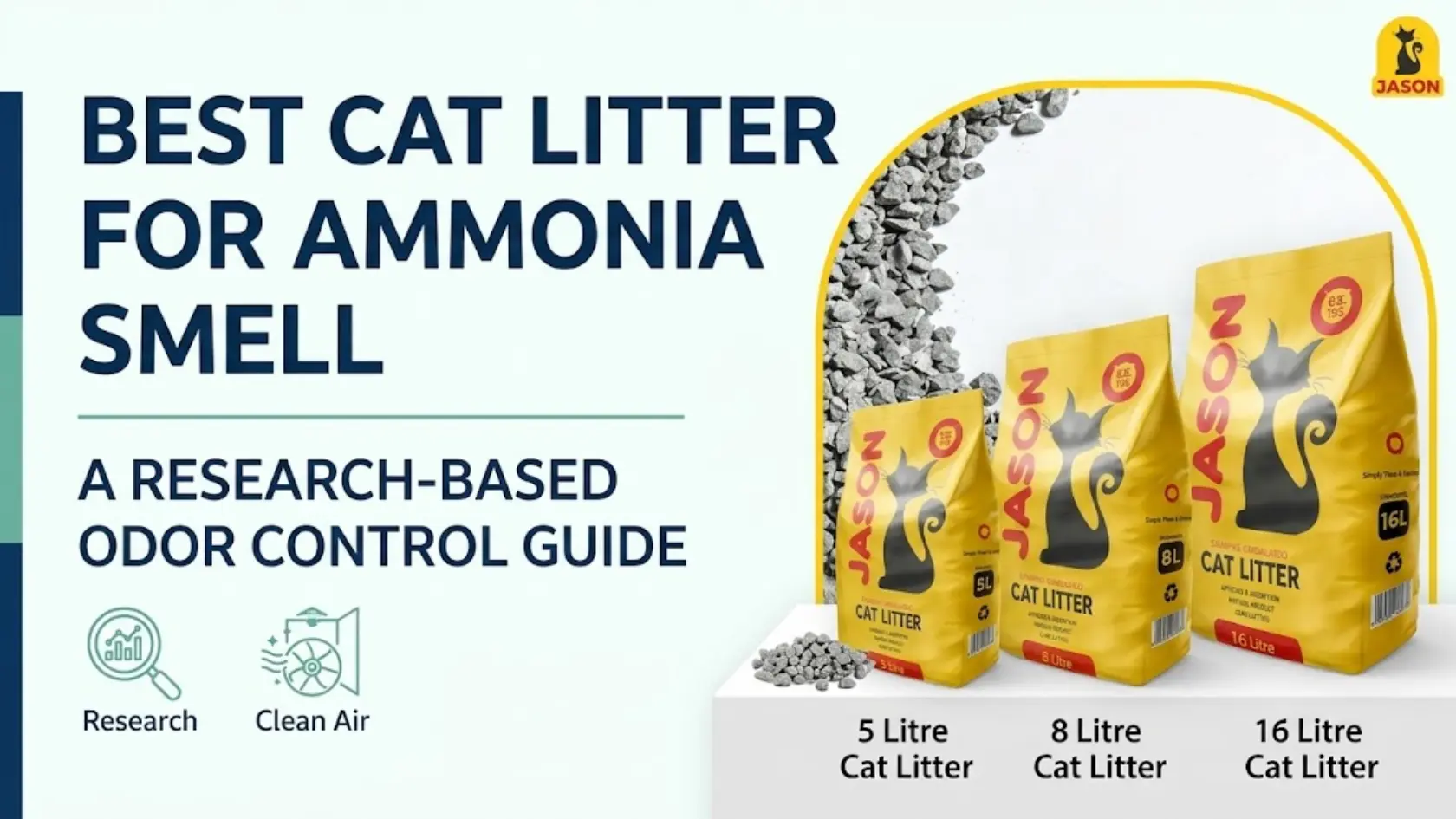
JASON clumping cat litter is formulated around exactly these points: advanced absorption, a clumping formula and a natural, long-lasting product, available in 5 Litre, 8 Litre and 16 Litre bags.
This guide explains the chemistry behind litter-box ammonia, compares the main litter types, and gives a daily routine that keeps a home smelling fresh. If you only read one line, make it this one: choose a clumping litter, scoop daily, and never let urine sit.
Why Does Cat Litter Smell Like Ammonia?
Cat litter smells like ammonia because bacteria in the tray convert urea in cat urine into ammonia gas. Fresh cat urine smells relatively mild. The sharp, eye-watering smell builds over hours as the urine breaks down.
The Chemistry in Four Steps
- Cats excrete concentrated urine. Cats evolved as desert animals and conserve water, so their urine is rich in urea and other nitrogen compounds.
- Bacteria release urease. Common bacteria in the litter tray produce an enzyme called urease.
- Urease splits urea into ammonia. The reaction turns urea into ammonia (NH3) and carbon dioxide. Ammonia is a volatile gas, so it rises out of the tray and into the room.
- Warmth and moisture speed it up. A warm room, a damp tray and urine left unscooped all give bacteria more time and better conditions to work.
Why Cat Urine Smells Stronger Than Other Pets'
Cat urine is more concentrated than that of many pets, and unneutered male cats also add strong-smelling sulfur compounds such as felinine derivatives. That is why an entire tom's tray can smell much stronger than a spayed female's.
Is Ammonia from Cat Litter Harmful?
At the low levels in a well-kept home, litter-box ammonia is mainly an unpleasant odor and an irritant. Humans can smell ammonia at concentrations of only a few parts per million, well below the levels workplace safety agencies set limits for. However, a neglected tray in a small, poorly ventilated room can irritate the eyes and airways of people and cats. Cats sit close to the litter surface, so they notice it first and may start avoiding the tray.
The takeaway: ammonia is a time problem. The faster urine is captured and removed, the less ammonia ever forms.
What Makes a Cat Litter Good at Controlling Ammonia Smell?
A litter controls ammonia best when it captures urine quickly, holds it in a removable clump, and keeps the tray surface dry. Use these six criteria when you compare products.
1. Clumping Speed and Strength
Urine should form a firm clump within minutes that lifts out whole. Weak clumps crumble, leaving wet fragments behind to break down into ammonia.
2. Absorption Capacity
Absorbent granules pull liquid away from the surface and stop it pooling on the tray floor. Pooled urine at the bottom is a hidden ammonia source many owners miss.
3. Odor-Neutralizing Ingredients
Some litters add materials that trap ammonia itself:
- Zeolite captures ammonium through ion exchange.
- Activated carbon adsorbs a wide range of odor molecules.
- Baking soda helps with general odor but is less effective against ammonia specifically, because ammonia is alkaline and baking soda is also mildly alkaline.
4. Fragrance Level
Heavy perfume masks odor rather than removing it, and many cats dislike scented litter. Unscented or lightly scented litter is the safer choice for most cats.
5. Dust Level
Low-dust litter is better for cats and for people with sensitive airways, and it keeps the home cleaner.
6. Value per Litre and Bag Size
Odor control depends on keeping enough clean litter in the tray. A bag size that matches your number of cats makes daily top-ups easy and affordable.
Which Type of Cat Litter Is Best for Ammonia Odor? (Comparison)
Clumping litter is generally the most effective type for ammonia odor, because it lets you remove urine completely every day. Non-clumping types absorb urine but keep it in the tray, so ammonia keeps building until the next full change.
| Litter type | How it handles urine | Ammonia control | Best for | Main drawback |
| Clumping clay (e.g. bentonite) | Forms solid clumps you scoop out | Excellent with daily scooping | Most homes, multi-cat homes | Heavier to carry |
| Silica gel crystals | Absorbs urine into crystals | Good short-term | Owners who scoop solids only | Saturates; full change needed |
| Non-clumping clay | Absorbs urine into the litter bed | Fair; smell builds over days | Very low budgets | Full changes every few days |
| Wood or pine pellets | Pellets swell and break into sawdust | Good natural masking | Eco-focused owners | Some cats dislike the texture |
| Paper pellets | Absorbs, low odor control | Weak | Post-surgery cats | Urine smell returns quickly |
| Plant-based clumping (corn, wheat, tofu) | Clumps, often flushable | Good | Lightweight preference | Varies widely by brand |
Verdict: for ammonia control in an everyday home, choose a quality clumping litter with strong absorption and scoop at least once a day. This is the category JASON clumping cat litter sits in.
JASON Clumping Cat Litter: Built for Everyday Odor Control
JASON cat litter is a clumping-formulated litter with advanced absorption, made to lock urine into clumps before it can turn into ammonia. It is a natural, long-lasting product sold in three sizes, so single-cat and multi-cat homes can both keep the tray topped up.
Why JASON Works Against Ammonia
- Clumping formula: urine binds into solid clumps you lift out, so it does not keep breaking down in the tray.
- Advanced absorption: granules draw moisture in and keep the surface dry for your cat's paws.
- Natural product: a simple, natural litter without heavy masking perfumes.
- Long lasting: because you remove only the used clumps, the clean litter around them keeps working.
Which JASON Size Should You Choose?
| Product | Best for | Typical use |
| 5 Litre Cat Litter | One cat, kittens, trying JASON for the first time | Compact bag, easy to carry and store |
| 8 Litre Cat Litter | One to two cats | The everyday middle size for regular top-ups |
| 16 Litre Cat Litter | Multi-cat homes, several trays | Best value per litre and fewer trips to the shop |
How to Stop Litter Box Ammonia Smell: A 7-Step Routine
To stop ammonia smell, scoop clumps daily, keep litter 5-8 cm deep, wash the tray regularly, and ventilate the room. Even the best litter needs a routine. Follow these steps with JASON clumping cat litter for consistent results.
- Fill to the right depth. Pour 5-8 cm (2-3 inches) of litter. Too shallow, and urine reaches the tray floor and pools; too deep, and some cats dig less tidily.
- Scoop at least once a day. Twice a day is better for multi-cat homes. Lift out every clump and every solid while they are fresh.
- Top up after scooping. Replace what you removed so the depth stays constant.
- Do a full change and wash regularly. Empty the tray completely every two to four weeks and wash it with hot water and unscented dish soap. Avoid bleach and ammonia-based cleaners: an ammonia cleaner can smell like urine to a cat and encourage marking.
- Replace scratched trays. Old plastic trays develop scratches that hold bacteria and odor. Replace them roughly once a year.
- Follow the "one tray per cat, plus one" rule. Fewer trays means more urine per tray and faster ammonia build-up.
- Ventilate and place wisely. Put trays in a ventilated spot away from food and water, not in a closed cupboard where gas concentrates.
Bonus tip: keep your cat well hydrated with fresh water or wet food. More diluted urine contains less urea per visit, which means less ammonia.
Common Mistakes That Make Ammonia Smell Worse
The biggest mistake is relying on fragrance instead of removal. Perfume sits on top of ammonia; it does not stop it forming.
| Mistake | Why it backfires | Better approach |
| Scooping every few days | Urine has time to convert to ammonia | Scoop daily with a clumping litter |
| Too little litter | Urine pools on the tray floor | Keep 5-8 cm depth |
| Air fresheners near the tray | Masks odor; may deter your cat | Ventilate and remove waste |
| Cleaning with bleach or ammonia products | Fumes irritate; ammonia invites re-marking | Hot water and unscented soap |
| Tray in a closed cupboard | Gas concentrates in a small space | Ventilated, open location |
| Topping up instead of full changes | Old litter and residue accumulate | Full change every 2-4 weeks |
When a Strong Ammonia Smell Means a Vet Visit
A sudden, unusually strong urine smell can be a health sign, not a litter problem. Contact your veterinarian if you notice any of the following alongside the smell:
- Larger or more frequent clumps than usual, which can point to increased thirst (kidney disease, diabetes or hyperthyroidism).
- Straining, crying, or many tiny clumps, which can signal a urinary tract problem such as cystitis or feline lower urinary tract disease.
- Blood in the urine or urinating outside the tray.
- A male cat straining with little or no urine: this can be a blocked urethra and is an emergency.
This guide is general information, not veterinary advice. Your vet can test a urine sample and rule out medical causes.
Find Your Answers
Q1. What cat litter is best for ammonia smell?
A fast-clumping, highly absorbent litter is best for ammonia smell, because it locks urine into clumps you remove daily. JASON clumping cat litter combines a clumping formula with advanced absorption for this reason.
Q2. Why does my cat's litter box smell like ammonia even after cleaning?
Usually urine has soaked to the tray floor, the tray plastic is scratched and holding bacteria, or the litter is too shallow. Wash the tray, check for scratches, and refill to 5-8 cm.
Q3. How often should I scoop to prevent ammonia smell?
Scoop at least once a day, and twice a day if you have more than one cat. Ammonia builds up within hours as bacteria break down urine.
Q4. Is clumping or non-clumping litter better for odor?
Clumping litter is better for odor, because you remove the urine itself. Non-clumping litter keeps the urine in the tray until the next full change.
Q5. Does baking soda stop ammonia smell in cat litter?
Baking soda helps with general odors, but it is not very effective against ammonia, because both are alkaline. Daily scooping and an absorbent clumping litter make a bigger difference.
Q6. How often should I completely change cat litter?
With a clumping litter and daily scooping, do a full change and tray wash every two to four weeks. Multi-cat trays may need a change every one to two weeks.
Q7. Is the ammonia smell from cat litter dangerous?
In a well-kept home it is mainly an irritant. In a small, unventilated room with a neglected tray, it can irritate eyes and airways for both people and cats.
Q8. How deep should cat litter be?
Keep litter 5-8 cm (2-3 inches) deep. This gives clumps enough material to form fully without urine reaching the tray floor.
Q9. Which JASON litter size should I buy?
Choose 5 Litre for one cat or a trial, 8 Litre for one to two cats, and 16 Litre for multi-cat homes or the best value per litre.
Q10. Can a strong ammonia smell mean my cat is ill?
Yes. A sudden change in smell, clump size or frequency can signal kidney disease, diabetes or a urinary problem. Ask your vet for a check-up.
Conclusion: The Best Cat Litter for Ammonia Smell Is the One That Removes Urine Fast
Ammonia smell is not a mystery: bacteria turn urea in cat urine into ammonia gas, and the longer urine sits, the stronger the smell. The solution is a fast-clumping, highly absorbent litter, scooped daily, kept at the right depth and paired with a clean, well-ventilated tray. Fragrances and sprays only cover the problem; removal solves it.
JASON clumping cat litter is designed for exactly this routine, with a clumping formula, advanced absorption and a natural, long-lasting product your cat will be comfortable using.
Ready for a Fresher Home? Try JASON Cat Litter Today
Pick the size that fits your household and start your daily odor-control routine:
- Shop JASON 5 Litre Cat Litter for one cat or a first try.
- Shop JASON 8 Litre Cat Litter for everyday one-to-two-cat homes.
- Shop JASON 16 Litre Cat Litter for multi-cat homes and the best value.
JASON. Simply clean, naturally fresh.