
What Is the Best Low-Dust Cat Litter?
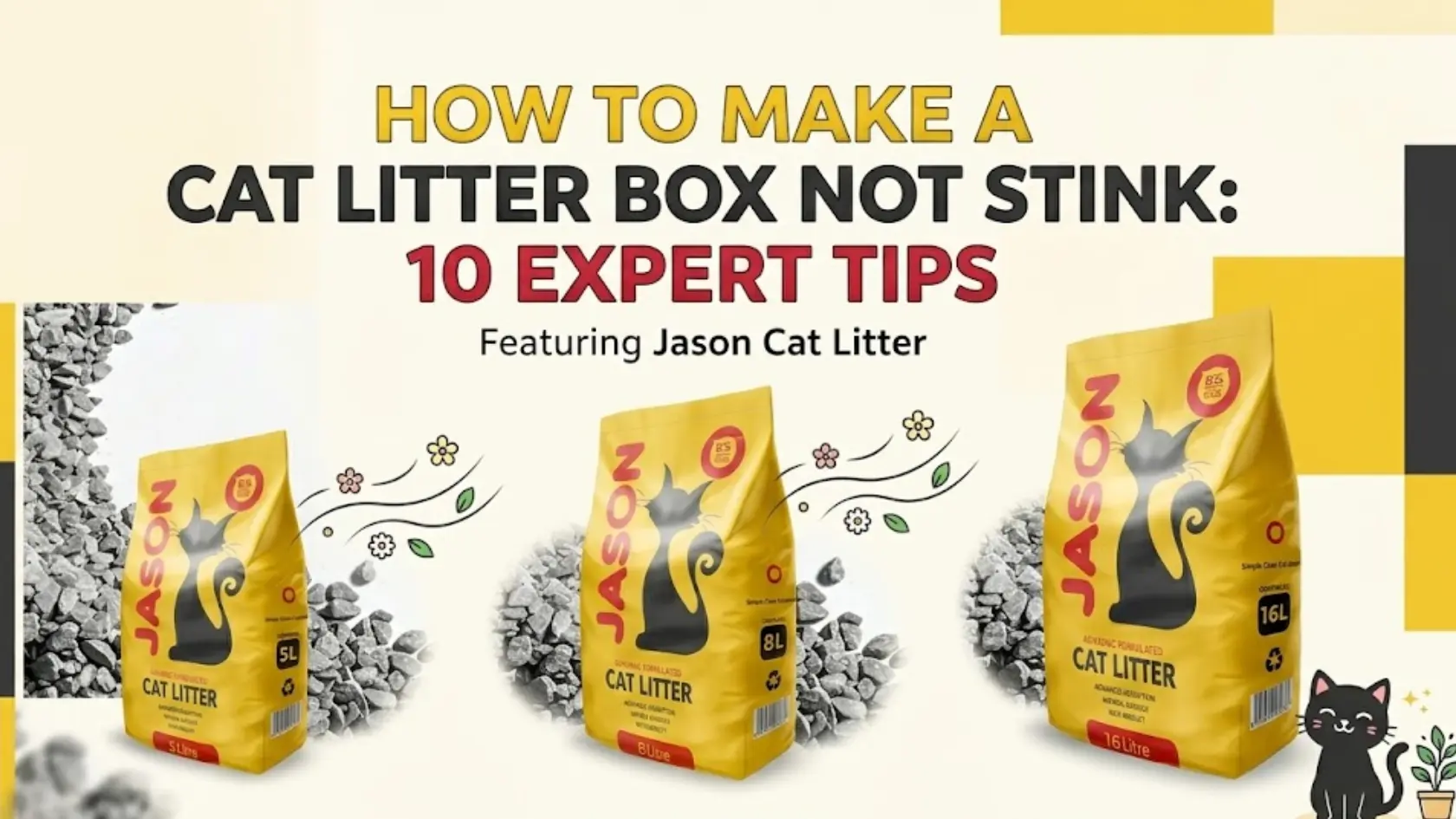
The best low-dust cat litter is a clumping formula with large, uniform granules, a "99% dust-free" or "low-dust" label, and no added powdered fragrance. Low-dust litter reduces airborne particles that can irritate your cat's airways and your own. For most homes, a quality clumping litter such as JASON cat litter (available in 5L, 8L and 16L) gives the best balance of low dust, strong odour control and easy scooping.
Every time your cat digs, fine particles lift into the air at nose height. Cats breathe that air more than anyone. This guide explains what litter dust is, which litter types make the least of it, and how to choose and use litter for cleaner air at home.
In this guide you will learn:
- Why cat litter dust matters for cats and people
- Which litter materials produce the most and least dust
- A 7-point checklist for choosing low-dust litter
- Which JASON cat litter size suits your home
- Simple habits that cut dust further
Why Does Cat Litter Dust Matter?
Cat litter dust matters because the fine particles are breathed in by your cat at close range and can irritate airways, eyes and skin. The risk is highest for cats with feline asthma, kittens, seniors, and cats recovering from surgery.
What Is Cat Litter Dust Made Of?
Litter dust is the powder that breaks off granules during packing, pouring and digging. Its makeup depends on the material:
- Clay litters (often sodium bentonite) can shed fine mineral powder. Some clays contain traces of crystalline silica, which health bodies such as they classify as harmful when inhaled at high, long-term occupational levels.
- Plant litters (wood, corn, wheat) can release organic dust and, in some cases, mould spores if stored damp.
- Fragranced litters may add powdered scent, which raises airborne particles further.
How Dust Affects Cats
Cats dig with their face close to the litter, so they meet the highest concentration of particles. Vets link dusty litter with:
- Sneezing, coughing and watery eyes
- Worsening of feline asthma, a lower-airway disease estimated to affect roughly 1-5% of cats veterinary review on feline asthma prevalence
- Dust on paws and fur that is swallowed during grooming
- Irritation of surgical wounds after spaying or neutering
How Dust Affects People
Fine particles can settle on floors and furniture near the litter tray. People with allergies, asthma or sensitive airways may notice more symptoms when pouring or scooping dusty litter. Note that the main trigger of cat allergy is the Fel d 1 protein from cat saliva and skin, not the litter itself, but dust can carry these allergens through the air.
Key fact: Dust is released mostly when you pour litter and when your cat digs. A low-dust litter cuts both moments.
Which Type of Cat Litter Is the Least Dusty?
Silica gel crystals, wood pellets, paper pellets and premium low-dust clumping litters produce the least dust; cheap non-clumping clay produces the most. But the least dusty litter is not always the best for your cat. Clumping, odour control and your cat's preference matter too.
| Litter type | Typical dust level | Clumping | Odour control | Best for |
| Premium low-dust clumping (e.g. JASON) | Low | Yes, firm clumps | Strong | Most households; easy daily scooping |
| Silica gel crystals | Very low | No (absorbs) | Strong | Owners who change litter less often |
| Wood pellets | Very low | No (break into sawdust) | Good | Eco-focused homes; some cats dislike texture |
| Paper pellets | Very low | No | Moderate | Post-surgery cats and kittens |
| Corn or wheat | Low-medium | Some | Moderate | Plant-based preference; store dry |
| Standard clumping clay | Medium-high | Yes | Good | Budget buyers who tolerate some dust |
| Non-clumping clay | High | No | Weak | Rarely recommended today |
Why clumping often wins: Clumping litter lets you remove only the soiled part. You top up less often, so you pour fewer fresh, dusty granules into the tray. Over a month, that means less dust released at home.
How to Choose a Low-Dust Cat Litter: 7-Point Checklist
To choose a low-dust cat litter, check the label for a dust claim, look for large uniform granules, and avoid powdered fragrance. Use this checklist in store or online:
- Dust claim on the pack. Look for "low dust" or "99% dust-free". Brands that remove fines during production say so.
- Granule size and shape. Larger, rounded, even granules break down less than small, sharp ones.
- Clumping strength. Firm clumps do not crumble into powder when scooped.
- Absorption. Strong absorption locks in moisture, so less wet litter dries into dust.
- Fragrance. Choose unscented or lightly scented. Cats have a powerful sense of smell, and scented powder adds dust.
- Natural ingredients. A natural product with no unnecessary additives is gentler for sensitive cats.
- Pack size for your household. Buying the right size keeps litter sealed and dry, and avoids waste.
Do the shake test: Pour a cup of litter into a clear glass from 20 cm. If a visible cloud hangs in the air for more than a few seconds, it is a dusty litter.
Our Pick: JASON Cat Litter (5L, 8L, and 16L)
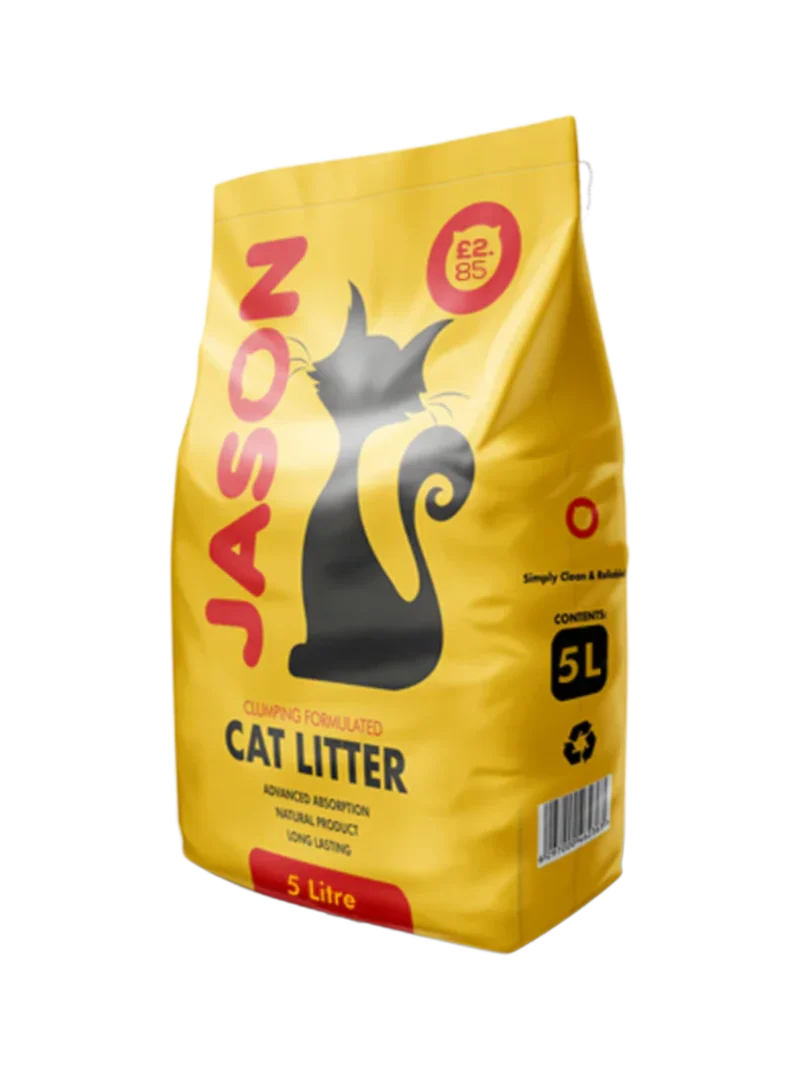
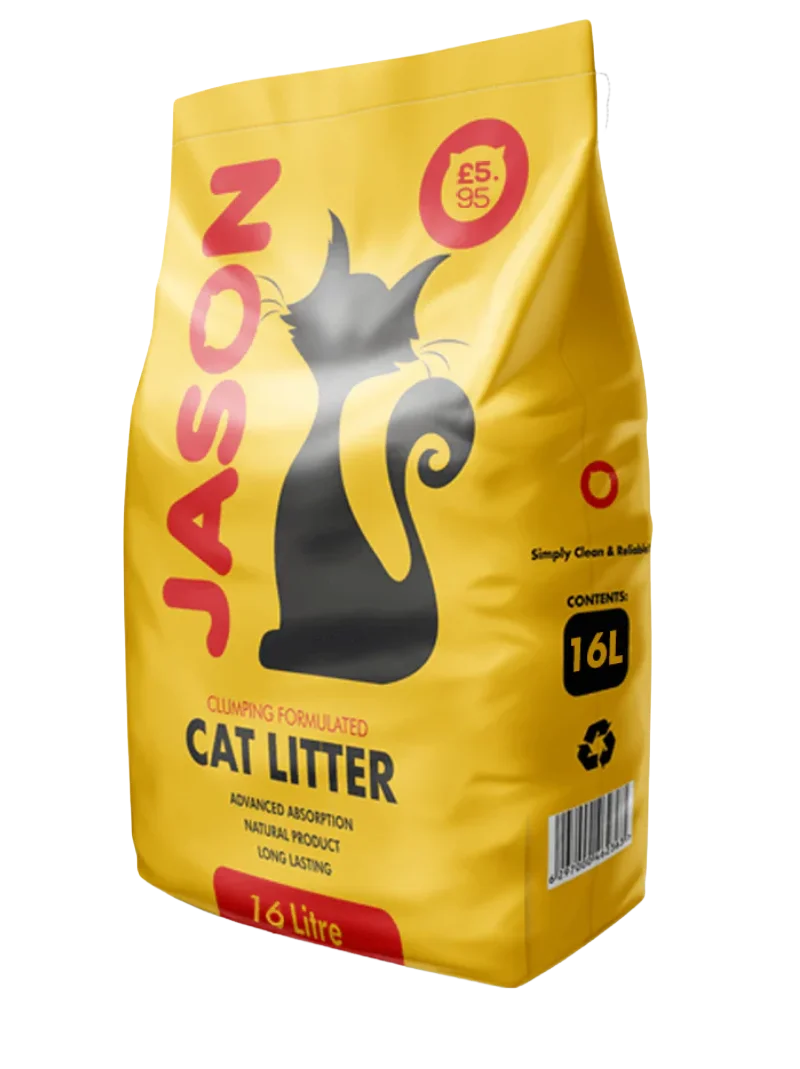
JASON cat litter is a clumping formulated, natural cat litter with advanced absorption, made for clean, long-lasting litter trays. It meets the key points on our checklist: firm clumping, strong absorption, a natural formula, and sizes for every household.
What Makes JASON Cat Litter a Strong Low-Dust Choice
- Clumping formulated: forms firm clumps you can lift out whole, so you top up less and pour less fresh dust.
- Advanced absorption: locks in moisture fast, which helps control odour and stops wet litter drying into powder.
- Natural product: simply clean and natural, with no unnecessary extras.
- Long lasting: you remove only what is soiled, so each bag goes further.
Which JASON Size Is Right for You?
| Product | Best for | Why choose it |
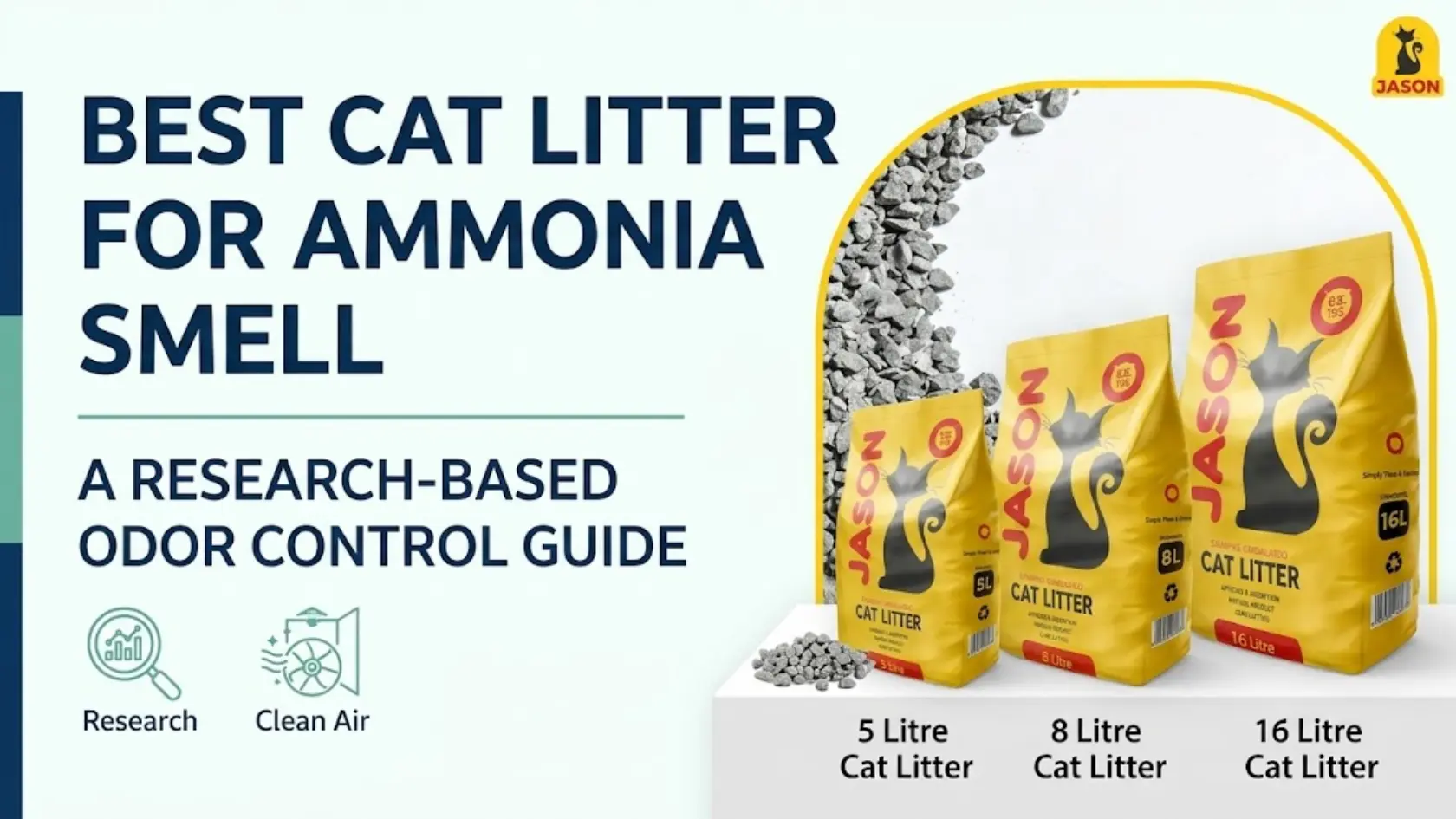
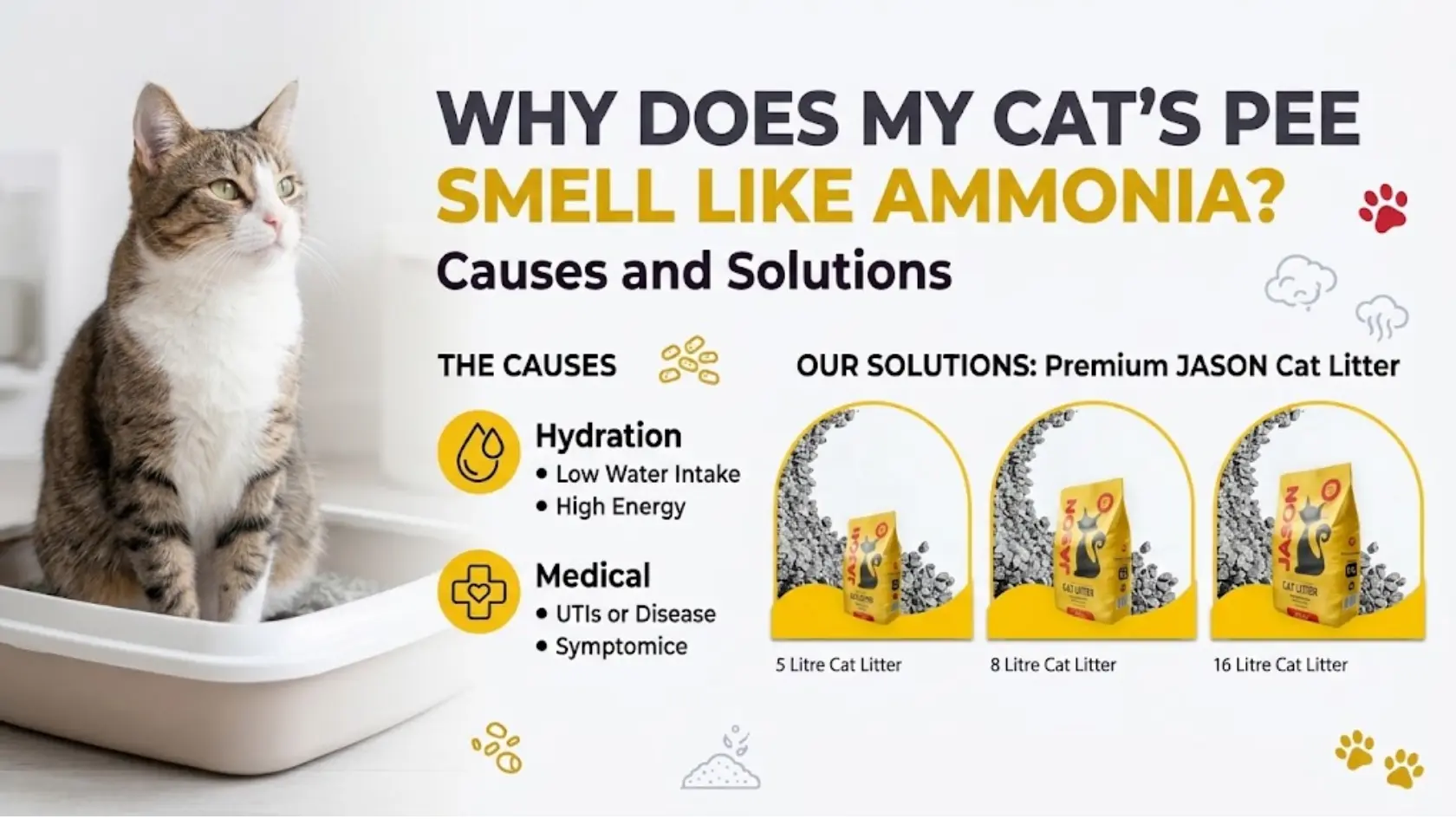
| JASON 5 Litre Cat Litter | One cat, small flats, trying JASON for the first time | Light, easy to carry and store; stays sealed and dry |
| JASON 8 Litre Cat Litter | One or two cats, regular top-ups | The everyday middle size for most homes |
| JASON 16 Litre Cat Litter | Multi-cat homes, bulk buyers | Best value per litre; fewer shop trips |
How to Reduce Cat Litter Dust at Home: 8 Steps
To reduce cat litter dust, pour slowly from a low height, scoop daily, keep litter 5-7 cm deep, and ventilate the litter area. Even the best low-dust cat litter works better with good habits.
- Pour low and slow. Hold the bag close to the tray. Most dust escapes in the first pour.
- Keep depth at 5-7 cm. Enough for digging, not so much that your cat kicks it out.
- Scoop once or twice a day. Remove clumps before they break apart.
- Top up, don't refill. With clumping litter like JASON, add fresh litter only to replace what you remove.
- Do a full change every 2-4 weeks. Wash the tray with mild, unscented soap and dry it fully.
- Store litter sealed and dry. Damp litter clumps in the bag and crumbles into powder.
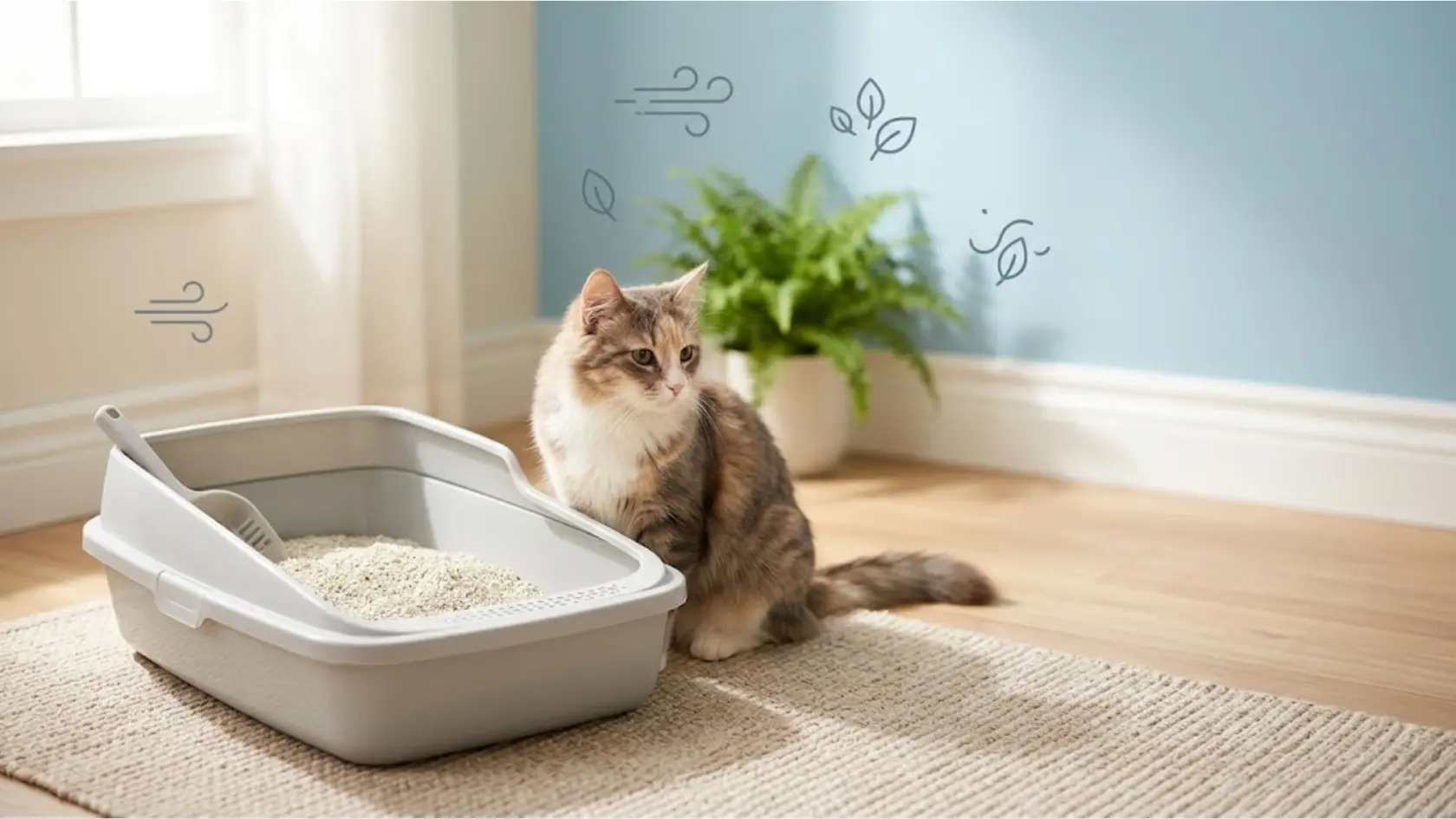
- Ventilate. Place the tray in a well-aired spot, away from food bowls. A HEPA air purifier nearby helps.
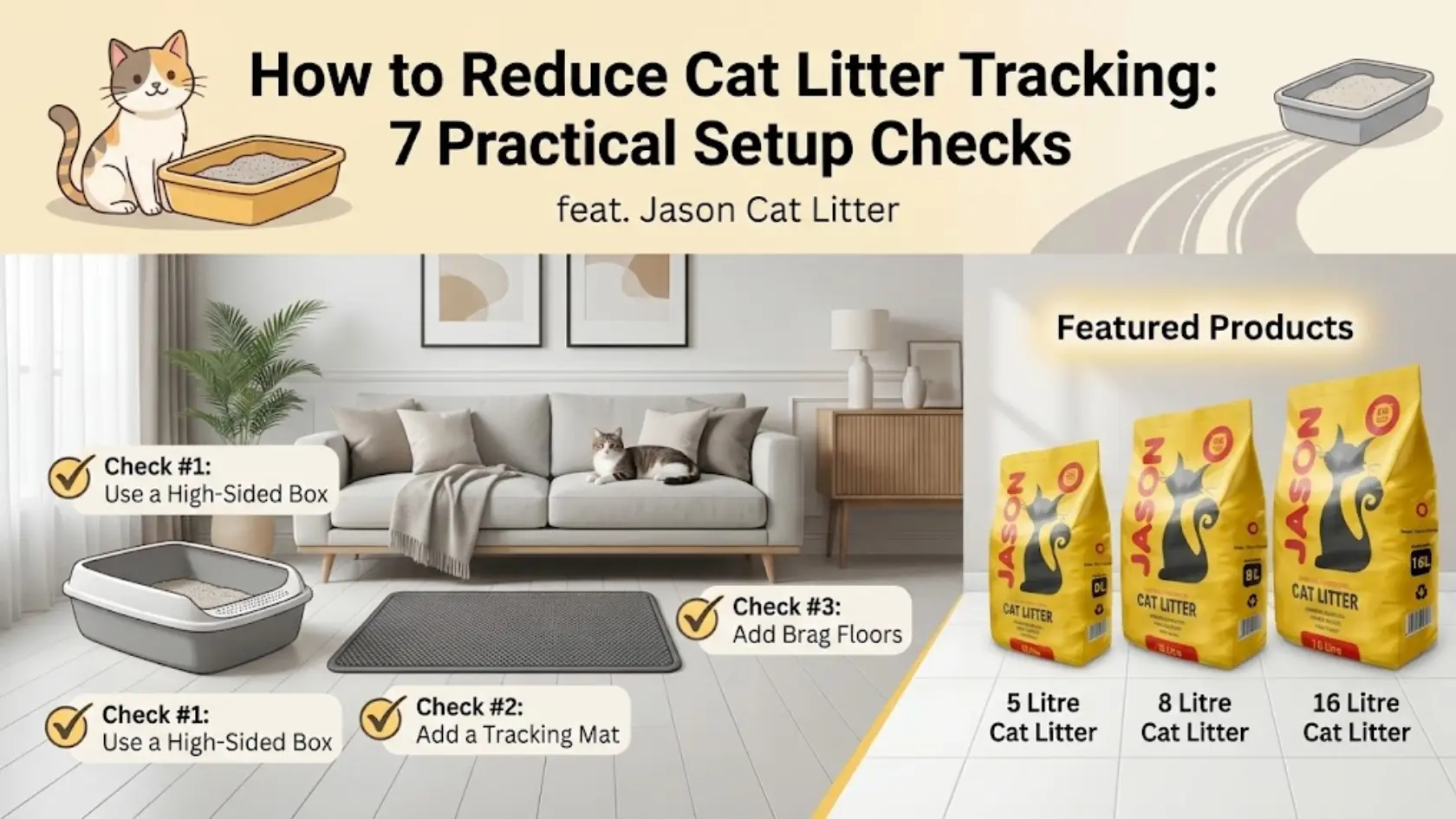
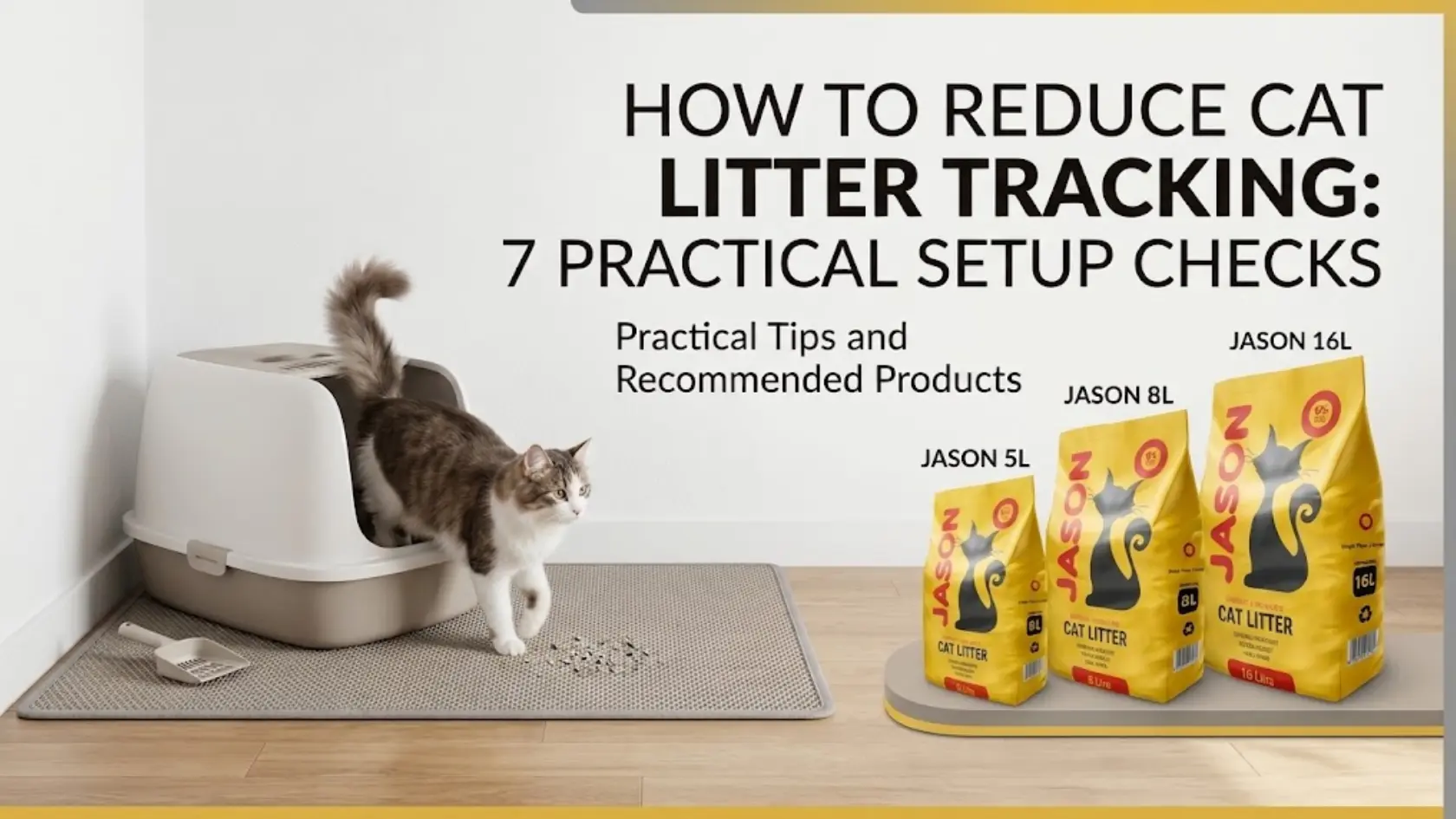
- Use a litter mat. It catches granules from paws so they are not crushed into dust underfoot.
When to Talk to Your Vet
Book a vet visit if your cat coughs, wheezes, breathes with an open mouth, or sneezes often. These can be signs of feline asthma or another airway problem, and changing litter alone may not be enough.
Things You Might Be Wondering
Q1. What is the best low-dust cat litter?
The best low-dust cat litter is a clumping formula with large, even granules and no powdered fragrance. JASON cat litter is a clumping formulated, natural litter with advanced absorption, available in 5L, 8L and 16L.
Q2. Is cat litter dust harmful to cats?
Cat litter dust can irritate a cat's nose, eyes and airways, and may worsen feline asthma. Cats with breathing problems, kittens, and cats after surgery benefit most from low-dust litter.
Q3. Is cat litter dust harmful to humans?
Occasional exposure is unlikely to harm healthy adults, but dust can bother people with asthma or allergies. Pour litter slowly, ventilate the area, and choose a low-dust formula to reduce exposure.
Q4. Is there a 100% dust-free cat litter?
No litter is completely dust-free. Granules always rub together in the bag. "99% dust-free" and "low-dust" litters remove most fine particles during production.
Q5. Is clumping litter dustier than non-clumping?
Not necessarily. Premium clumping litters are often less dusty than cheap non-clumping clay. Clumping also means fewer top-ups, so you pour less fresh litter over time.
Q6. What litter is best for cats with asthma?
Cats with asthma need an unscented, very low-dust litter. Ask your vet to recommend a type. Avoid scented and powdery litters, and keep the tray in a well-ventilated room.
Q7. How do I know if my cat litter is too dusty?
Your litter is too dusty if a cloud forms when you pour it, dust settles around the tray, or your cat sneezes after using it. Try the shake test in a clear glass.
Q8. How often should I change low-dust cat litter?
Scoop clumps daily and do a full change every 2-4 weeks. Multi-cat homes may need a full change more often.
Q9. Does scented litter make more dust?
Scented litters can add powdered fragrance, which increases airborne particles. Many cats also dislike strong scents and may avoid the tray.
Q10. Which JASON cat litter size should I buy?
Choose JASON 5L for one cat or a first try, 8L for everyday use with one or two cats, and 16L for multi-cat homes or the best value.
Conclusion: Cleaner Air Starts in the Litter Tray
The best low-dust cat litter combines firm clumping, strong absorption, large granules and a natural, unscented formula. It protects your cat's airways, keeps your home cleaner, and makes scooping easier. Pair the right litter with simple habits: pour low, scoop daily, store it dry, and ventilate the tray area.
JASON cat litter brings these qualities together in a clumping formulated, naturally clean litter, in a size for every home.
Ready for a Cleaner, Fresher Litter Tray?
Shop JASON cat litter today and choose your size:
- JASON 5L - perfect for one cat
- JASON 8L - the everyday favourite
- JASON 16L - best value for multi-cat homes