
Cat pee smells like ammonia because bacteria break down urea in the urine into ammonia gas. The smell gets stronger the longer urine sits in the litter tray, and when urine is highly concentrated. A mild ammonia smell from an uncleaned tray is normal. A sudden, very strong smell, especially alongside drinking more, peeing more or straining, can signal dehydration, a urinary tract infection, kidney disease or diabetes and needs a vet check.
Most owners fix everyday ammonia odour with three changes: scoop at least once a day, keep their cat well hydrated, and use a clumping litter that traps urine quickly. JASON cat litter is clumping formulated with advanced absorption, so urine is locked into a scoopable clump before bacteria have time to produce ammonia.
Why Does Cat Urine Smell Like Ammonia?
Cat urine smells like ammonia because of urea, a nitrogen-rich waste product the liver makes when it breaks down protein. Cats are obligate carnivores, so their high-protein diet produces a lot of urea, and their kidneys concentrate it into a small volume of urine.
Fresh cat urine has only a faint smell. Once it lands in the litter tray, bacteria release an enzyme called urease, which splits urea into ammonia and carbon dioxide. That released ammonia is the sharp, eye-watering smell owners notice.
- Urine is passed - it contains urea, salts and a cat-specific compound called felinine.
- Bacteria colonise it - they are already present in litter, on paws and in the air.
- Urease converts urea - urea breaks down into ammonia gas.
- The smell builds over hours - warm rooms and damp, unclumped litter speed this up.
Why Cat Pee Smells Stronger Than Dog Pee
Cats evolved from desert-dwelling ancestors and drink relatively little, so their urine is far more concentrated than a dog's. More concentrated urine means more urea per drop, and therefore more ammonia once it breaks down. Felinine, a sulphur-containing amino acid found mainly in the urine of intact male cats, adds the musky "tom cat" note on top.
9 Causes of Ammonia-Smelling Cat Pee
Most strong ammonia smells come from the litter tray itself, not from illness. Work down this table from the most common, easily fixed causes to the medical ones.
| Cause | Why it raises the ammonia smell | Other signs to look for | What to do |
| Infrequent scooping | Urine sits for days, giving bacteria time to make ammonia | Smell worst near the tray, damp litter | Scoop once or twice daily; full change every 1–2 weeks |
| Non-clumping or low-absorbency litter | Urine pools at the bottom of the tray and keeps breaking down | Wet, soggy base; smell returns after scooping | Switch to a clumping litter such as JASON |
| Too few trays | Each tray is used more, so urine builds up faster | Accidents outside the tray | Follow the rule of one tray per cat, plus one |
| Dehydration | Less water makes urine more concentrated | Small, dark clumps; dry food only | Add wet food, water fountains, extra bowls |
| High-protein diet | More protein produces more urea | Smell strong but cat otherwise well | Usually normal; ask your vet before changing diet |
| Unneutered male cat | Testosterone raises felinine and drives spraying | Spraying on walls, musky smell | Speak to your vet about neutering |
| Urinary tract infection (UTI) or FLUTD | Bacteria in the bladder start breaking urea down early | Straining, frequent small pees, blood, peeing outside the tray | See a vet within 24 hours |
| Chronic kidney disease (CKD) | Kidney damage alters urine and waste handling | Thirst, weight loss, poor coat, bad breath | Vet blood and urine tests |
| Diabetes or hyperthyroidism | Changes urine composition and volume | Heavy thirst, large clumps, weight loss, big appetite | Vet blood and urine tests |
Is a Strong Ammonia Smell Normal for Cats?
Yes, some ammonia smell is normal, particularly in a tray that has not been scooped for a day or more. What matters is change. If the smell is suddenly stronger than usual, or arrives alongside a change in drinking, peeing or behaviour, treat it as a health signal rather than a cleaning problem.
When Should You Take Your Cat to the Vet?
Book a vet appointment if a stronger ammonia smell comes with any change in your cat's health or habits. Urine changes are often one of the earliest visible signs of kidney disease, diabetes and urinary problems, which are common in middle-aged and older cats.
Emergency - go to a vet immediately if your cat:
- Strains in the tray and passes little or no urine, especially a male cat. A urethral blockage can become life-threatening within 24–48 hours.
- Cries or shows pain when trying to pee.
- Is vomiting, very lethargic or not eating alongside urinary changes.
Book an appointment within a few days if your cat:
- Is drinking noticeably more water than usual.
- Is producing larger or more frequent clumps.
- Has blood in the urine or pink-tinged clumps.
- Is peeing outside the litter tray.
- Is losing weight despite a normal or bigger appetite.
- Has a strong smell that persists even with a freshly cleaned tray.
Your vet will usually run a urinalysis (to check urine concentration, crystals, blood and bacteria) and blood tests. Take a fresh urine sample if you can; your vet can supply non-absorbent litter to collect one.
How to Stop Cat Pee from Smelling Like Ammonia: 7 Steps
The fastest way to cut ammonia odour is to remove urine before bacteria can break it down, and to keep that urine less concentrated in the first place.
- Rule out a medical cause. If the smell changed suddenly or your cat shows any symptom above, see your vet first. No litter can fix a UTI or kidney disease.
- Scoop at least once a day. Twice a day is better in multi-cat homes. Removing clumps quickly stops the urea-to-ammonia reaction before it peaks.
- Use a clumping, highly absorbent litter. Clumping litter wraps urine into a solid ball you can lift out whole, instead of letting it soak to the base of the tray. JASON cat litter is clumping formulated for exactly this.
- Keep litter at the right depth. Around 5–7 cm lets clumps form fully without urine reaching the tray floor.
- Do a full litter change and wash the tray. Every 1–2 weeks, empty everything, wash with warm water and unscented mild soap, dry fully and refill. Avoid bleach and ammonia-based cleaners; the smell can encourage cats to mark the spot.
- Increase water intake. Add wet food, try a pet water fountain, and place water bowls away from food and the tray. More dilute urine produces less ammonia.
- Improve tray set-up. Provide one tray per cat plus one, place trays in quiet, ventilated spots, and replace scratched plastic trays every year or so, as scratches trap bacteria.
Quick Fixes That Do Not Work
- Scented sprays and heavily perfumed litter mask the smell briefly but do not stop ammonia forming, and strong scents can put cats off the tray.
- Topping up instead of changing leaves old urine at the base of the tray to keep producing ammonia.
- Cutting water to reduce peeing concentrates urine and makes the smell, and the health risk, worse.
What Is the Best Cat Litter for Ammonia Smell?
The best cat litter for ammonia smell is a clumping, highly absorbent litter, because it locks urine into a solid clump you remove before bacteria turn urea into ammonia. Look for four things: fast clumping, strong absorption, low dust and no heavy perfume.
JASON cat litter is built around those four needs. Every bag is:
- Clumping formulated - urine forms firm clumps that lift out in one scoop.
- Advanced absorption - moisture is drawn in quickly, so it does not pool at the base of the tray.
- Natural product - made from natural granules, without the heavy fragrance that can deter cats.
- Long lasting - because you only remove the used clumps, the rest of the litter stays clean for longer.
Which JASON Cat Litter Size Is Right for You?
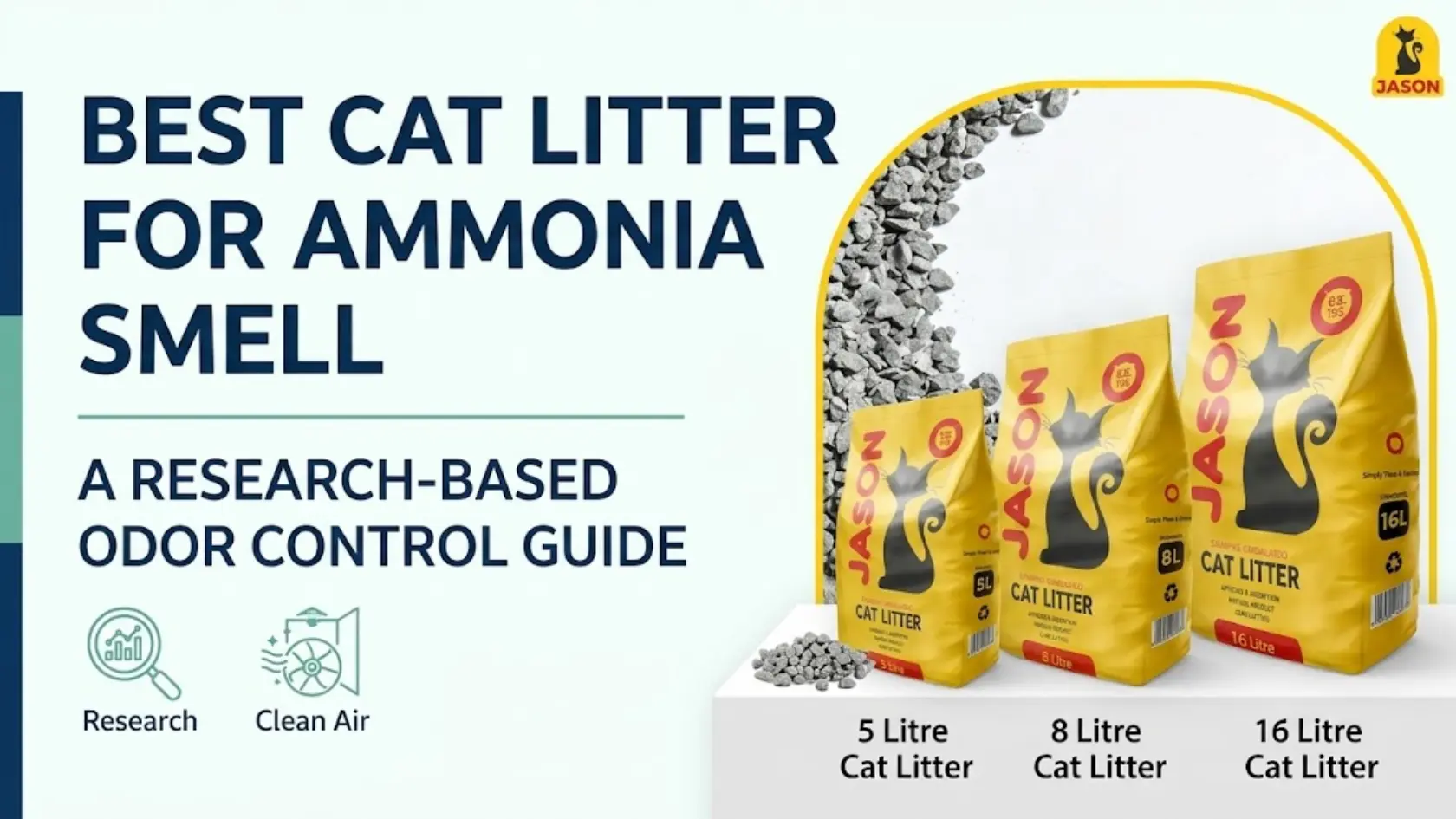
| Product | Best for | Why choose it |
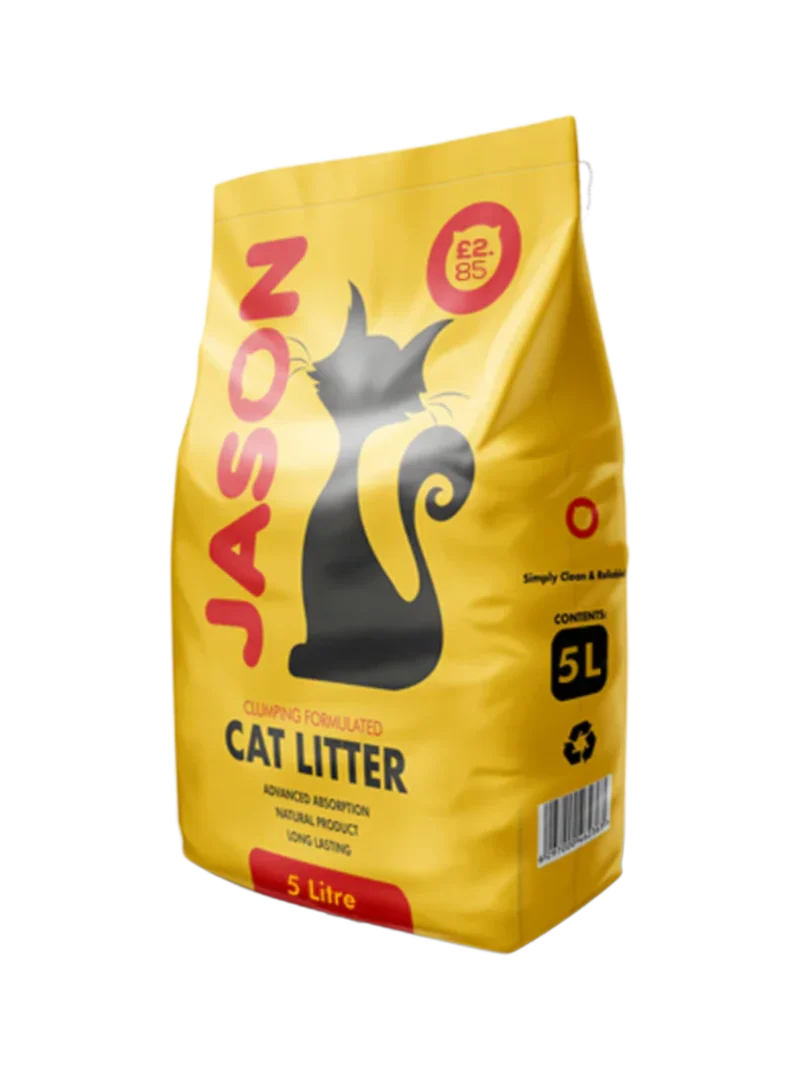
| JASON 5 Litre Cat Litter | Single-cat homes, kittens, trying JASON for the first time | Light, easy-to-carry bag; ideal for topping up between full changes |
| JASON 8 Litre Cat Litter | One or two cats, regular weekly routines | The middle-size bag for steady everyday use |
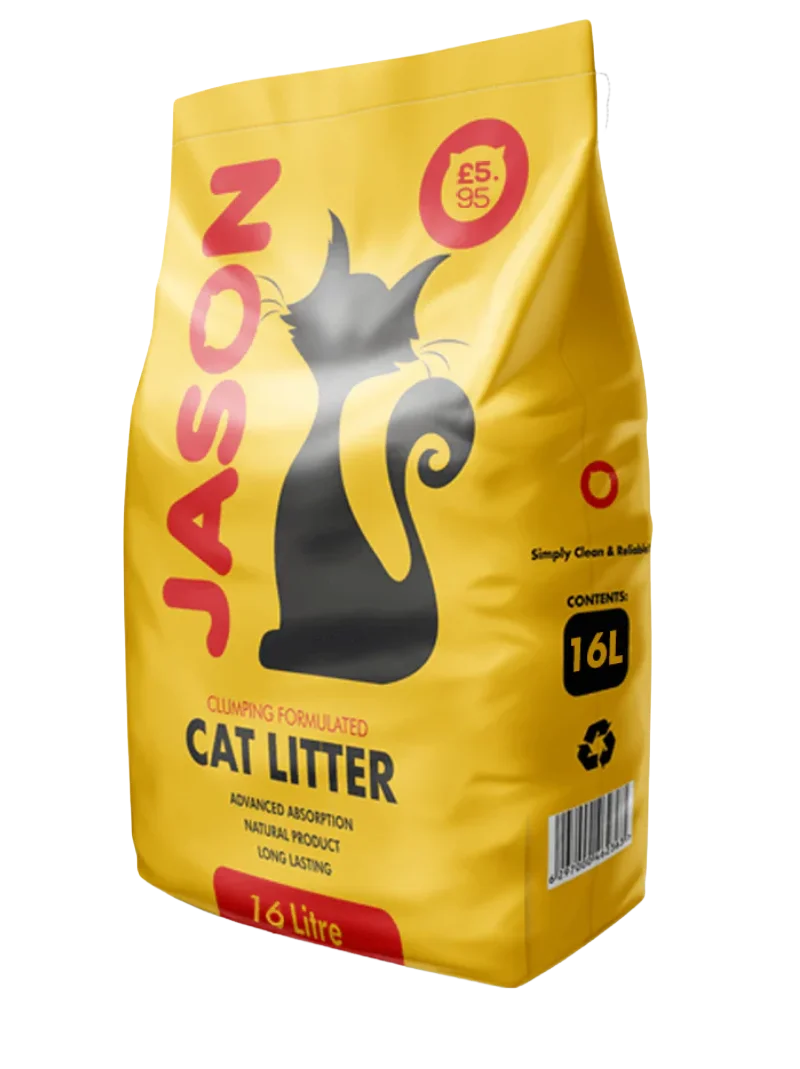
| JASON 16 Litre Cat Litter | Multi-cat homes, multiple trays, stocking up | Largest bag and best for frequent full changes, where ammonia builds fastest |
In a multi-cat home, where trays fill quickly and ammonia builds fastest, the JASON 16 Litre bag lets you keep every tray at the right depth and do full changes without running short.
How to Get Rid of Cat Urine Smell in Your Home
To remove cat urine smell from floors, carpets or furniture, use an enzymatic cleaner, which breaks down the uric acid crystals that keep releasing odour. Ordinary household cleaners and air fresheners leave those crystals behind, so the smell returns, often worse in humid weather.
- Blot, do not rub. Soak up as much fresh urine as possible with paper towels.
- Apply an enzymatic cleaner. Saturate the area so it reaches as deep as the urine did, and leave it for the time on the label.
- Let it air-dry fully. Cover with foil or a laundry basket so your cat cannot return to the spot while it dries.
- Check with a UV torch. Dried urine glows under UV light, so you can find old patches you missed.
- Repeat on stubborn stains. Older or repeated marks may need two or three treatments.
Avoid bleach and ammonia-based products. Ammonia smells like urine to a cat and can encourage it to pee in the same place again. If accidents keep happening, check the tray set-up and speak to your vet, as peeing outside the tray is a common sign of urinary discomfort.
Helpful Information
Q1. Why does my cat's pee smell so strong all of a sudden?
A sudden increase in urine smell usually means the urine has become more concentrated or contains bacteria. Common causes are dehydration, a urinary tract infection, kidney disease or diabetes. If the change lasts more than a day or two, or comes with other symptoms, see your vet.
Q2. Is ammonia-smelling cat urine dangerous to humans?
In a well-ventilated home with a regularly scooped tray, the ammonia from cat urine is not a health risk for most people. Very high levels from neglected trays or soaked carpets can irritate eyes and airways, especially in people with asthma. Regular scooping and good ventilation keep levels low.
Q3. Can a UTI make cat pee smell like ammonia?
Yes. In a urinary tract infection, bacteria in the bladder begin breaking down urea before the urine is passed, so it can smell strongly of ammonia straight away. Other signs include straining, frequent small pees, blood in the urine and peeing outside the tray.
Q4. Does kidney disease change the smell of cat urine?
Kidney disease can change both the smell and the volume of cat urine. Many cats with chronic kidney disease produce larger amounts of paler urine and drink more. Because the change can be gradual, routine blood and urine tests for cats over 7 are worth discussing with your vet.
Q5. Does dry food make cat pee smell worse?
Dry food can make cat urine smell stronger because cats on dry-only diets often take in less water, which concentrates the urine. Adding wet food or encouraging drinking usually reduces the smell.
Q6. Why does male cat urine smell worse than female cat urine?
Unneutered male cats produce more felinine, a compound that gives urine a strong, musky smell, and they often spray to mark territory. Neutering usually reduces both the smell and spraying.
Q7. How often should I change cat litter to stop ammonia smell?
Scoop clumps at least once a day and do a full litter change with a tray wash every 1–2 weeks. Multi-cat homes may need more frequent full changes.
Q8. Does clumping cat litter reduce ammonia smell?
Yes. Clumping litter traps urine in a solid clump that you remove completely, so less urine is left behind for bacteria to turn into ammonia. JASON cat litter is clumping formulated with advanced absorption for this reason.
Q9. Should I add baking soda to cat litter?
A thin layer of baking soda under the litter can help absorb some odour, but it does not replace daily scooping or a good clumping litter. Avoid scented additives, which can put cats off the tray.
Final Thoughts
Cat pee smells like ammonia because bacteria turn urea into ammonia once urine sits in the tray, and concentrated urine makes it stronger. A mild smell from an uncleaned tray is normal; a sudden, stronger smell with changes in thirst, peeing or behaviour is a reason to see your vet.
For everyday odour, the fix is simple: rule out illness, scoop daily, keep your cat hydrated, wash the tray regularly and use a clumping litter that locks urine away before ammonia can form.
Fresher Trays Start with JASON
Give your cat a cleaner tray and your home a fresher smell with JASON cat litter: clumping formulated, highly absorbent, natural and long lasting. Shop JASON products → Choose the 5 Litre, 8 Litre or 16 Litre bag to suit your home.