
How Do You Make a Cat Litter Box Not Stink?
To make a cat litter box not stink, scoop waste at least once a day, use a high-absorption clumping litter, keep 5-7 cm of litter in the box, and wash the whole box with mild unscented soap every 1-2 weeks. Place the box in a ventilated spot and keep one box per cat plus one extra.
- Scoop urine clumps and feces every day.
- Use a clumping litter, such as JASON cat litter, that locks urine in tight clumps.
- Keep litter 5-7 cm (2-3 inches) deep.
- Fully replace the litter and wash the box every 1-2 weeks.
- Replace scratched plastic boxes every 12 months.
- Put the box in a well-ventilated, low-traffic area.
- Provide one box per cat, plus one.
A stinky litter box is one of the most common reasons cat owners in Pakistan and worldwide feel embarrassed to invite guests over. The good news: the smell is not a mystery. It comes from a few predictable chemical processes, and each one has a simple fix. This guide from the JASON pet care team explains why litter boxes smell, the 10 habits that stop odor at the source, how to choose the right litter, and when a bad smell means your cat needs a vet.
Why Does a Cat Litter Box Smell So Bad?
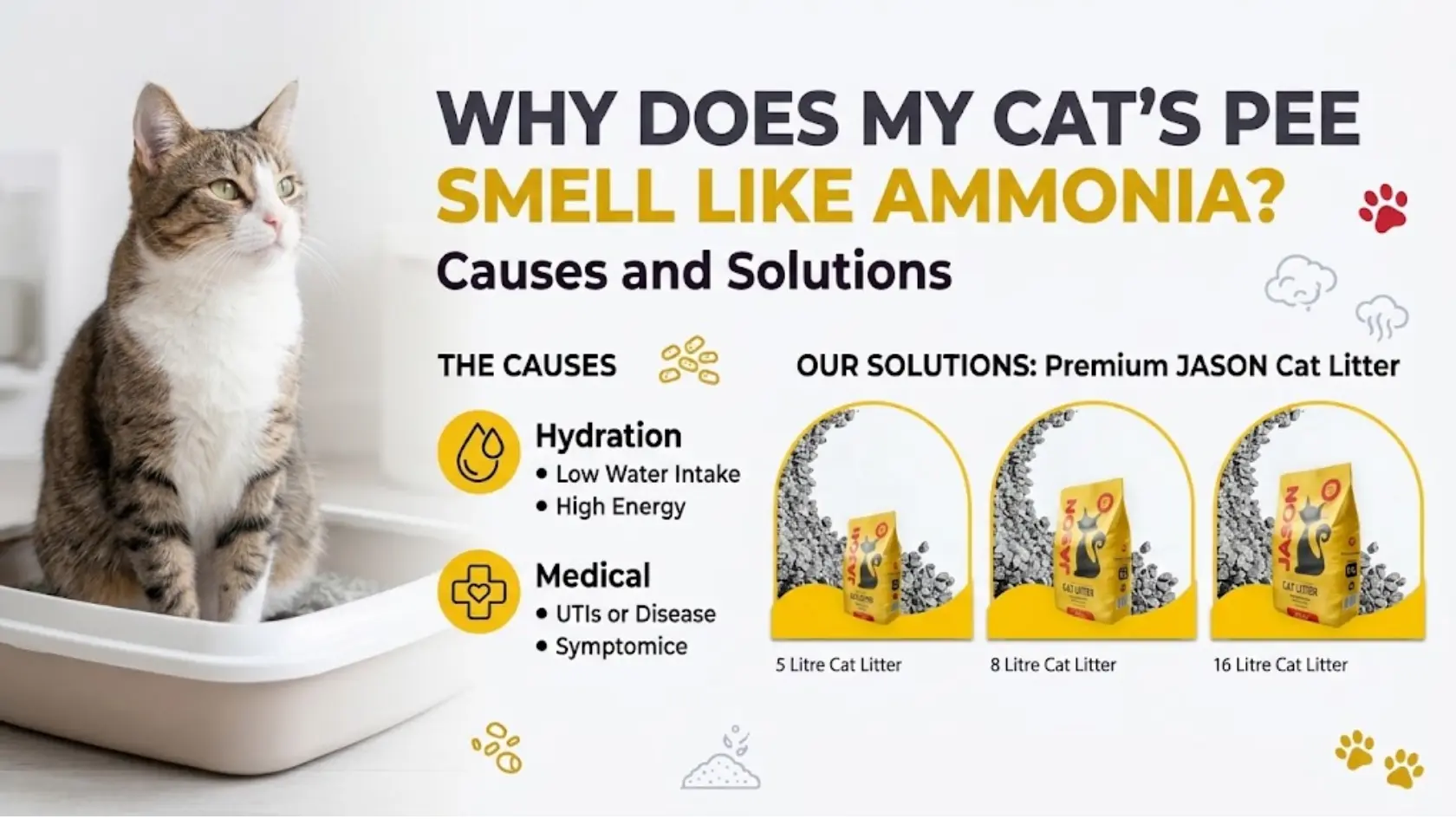
A litter box smells mainly because bacteria break down urea in cat urine into ammonia, the sharp, eye-watering odor most owners notice. Cats evolved as desert animals, so their urine is highly concentrated, which makes the smell stronger than that of many other pets.
Four things drive litter box odor:
- Ammonia from urine. Urea sits in the litter and bacteria convert it into ammonia over hours, not days. The longer urine stays, the stronger the smell.
- Feces left uncovered. Stool releases sulfur compounds and other volatile gases until it is removed.
- Saturated litter. Once litter can no longer absorb liquid, urine pools at the bottom of the box and soaks into the plastic.
- Heat and humidity. Warm, humid weather, common across Pakistan in summer and monsoon months, speeds bacterial growth and makes odor spread faster.
In short, odor control comes down to three jobs: remove waste quickly, trap liquid before bacteria reach it, and keep the box itself clean and dry.
10 Proven Ways to Keep a Cat Litter Box from Stinking
1. Scoop at Least Once a Day, Twice for Multiple Cats
Daily scooping is the single most effective way to stop litter box smell. Removing urine clumps before bacteria turn urea into ammonia prevents most odor from forming. In homes with two or more cats, scoop morning and evening.
2. Use a High-Quality Clumping Litter
Clumping litter binds urine into a solid ball that you lift out whole, so liquid never reaches the bottom of the box. JASON cat litter is clumping formulated with advanced absorption, which means each clump traps moisture and odor together. Non-clumping litters only absorb, so urine stays in the box until the next full change.
3. Keep the Litter 5-7 cm (2-3 Inches) Deep
Too little litter lets urine reach the plastic and pool. Too much encourages cats to dig and scatter it. A depth of 5-7 cm gives clumps room to form without sticking to the floor of the box. Top up after each scooping session.
4. Replace All the Litter and Wash the Box Every 1-2 Weeks
Even with daily scooping, tiny particles of urine build up. Empty the box completely, wash it with warm water and mild, unscented dish soap, dry it fully, and refill with fresh litter. Avoid bleach and ammonia-based cleaners: ammonia smells like urine to a cat and may encourage marking.
5. Replace Plastic Litter Boxes Once a Year
Cat claws leave scratches in plastic that trap bacteria and odor no amount of washing removes. If your box still smells right after cleaning, it is time for a new one. Stainless steel boxes resist scratches and last longer.
6. Choose the Right Location and Ventilation
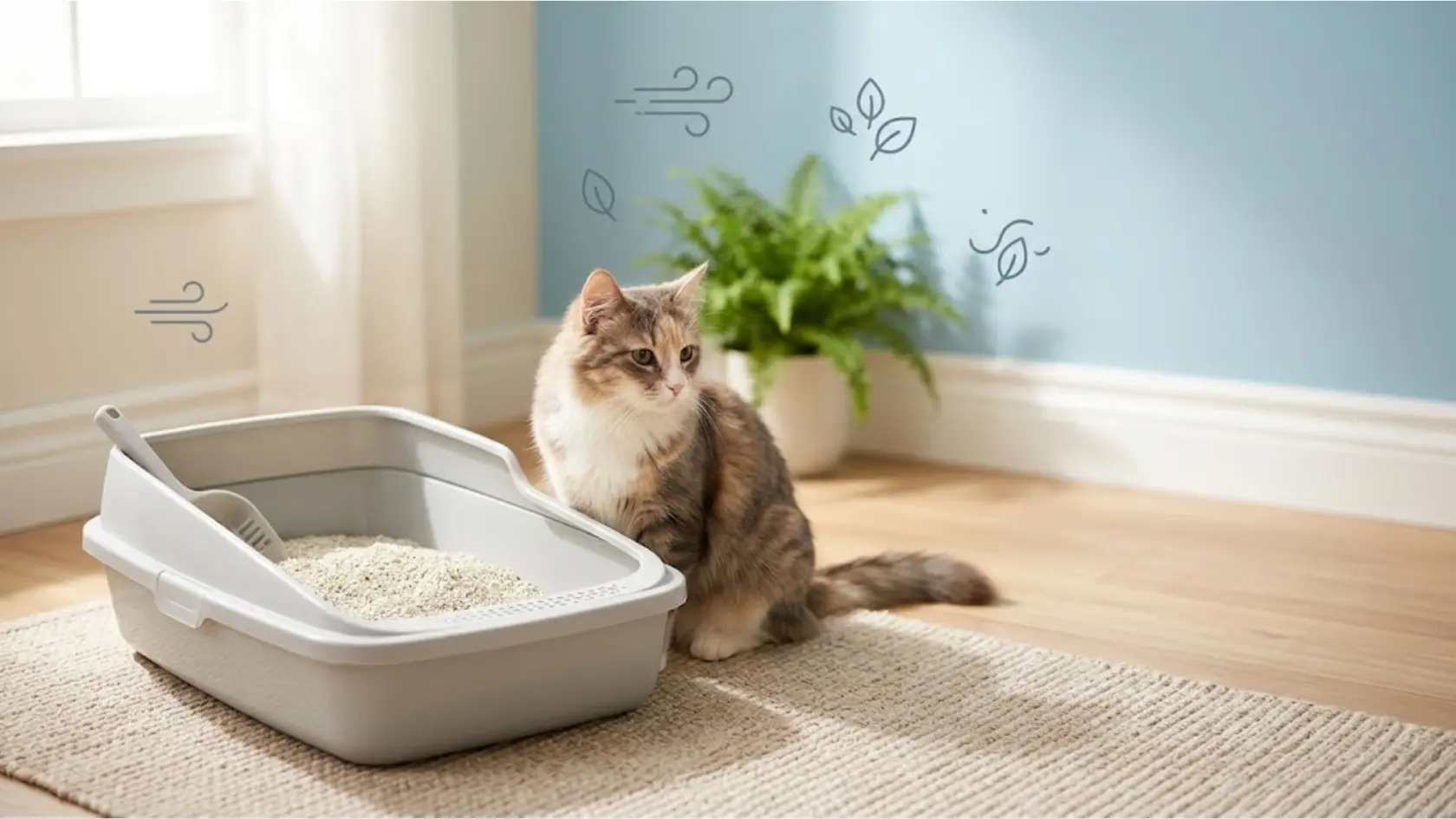
Place the box in a quiet, well-ventilated area, never in a closed cupboard or next to your cat's food bowl. A spot near a window or exhaust fan lets ammonia disperse instead of building up. Avoid hot, damp corners such as unventilated bathrooms in summer.
7. Follow the “One Box per Cat, Plus One” Rule
Overused boxes saturate fast and smell faster. Two cats need three boxes. Spreading waste across more boxes keeps each one cleaner and reduces stress-related accidents outside the box.
8. Sprinkle Baking Soda Under the Litter
A thin layer of plain baking soda (sodium bicarbonate) on the floor of the box helps neutralize acidic odors. Use only a light layer and avoid scented powders. Cats have a strong sense of smell and may refuse a perfumed box.
9. Use a Litter Mat and Liners Wisely
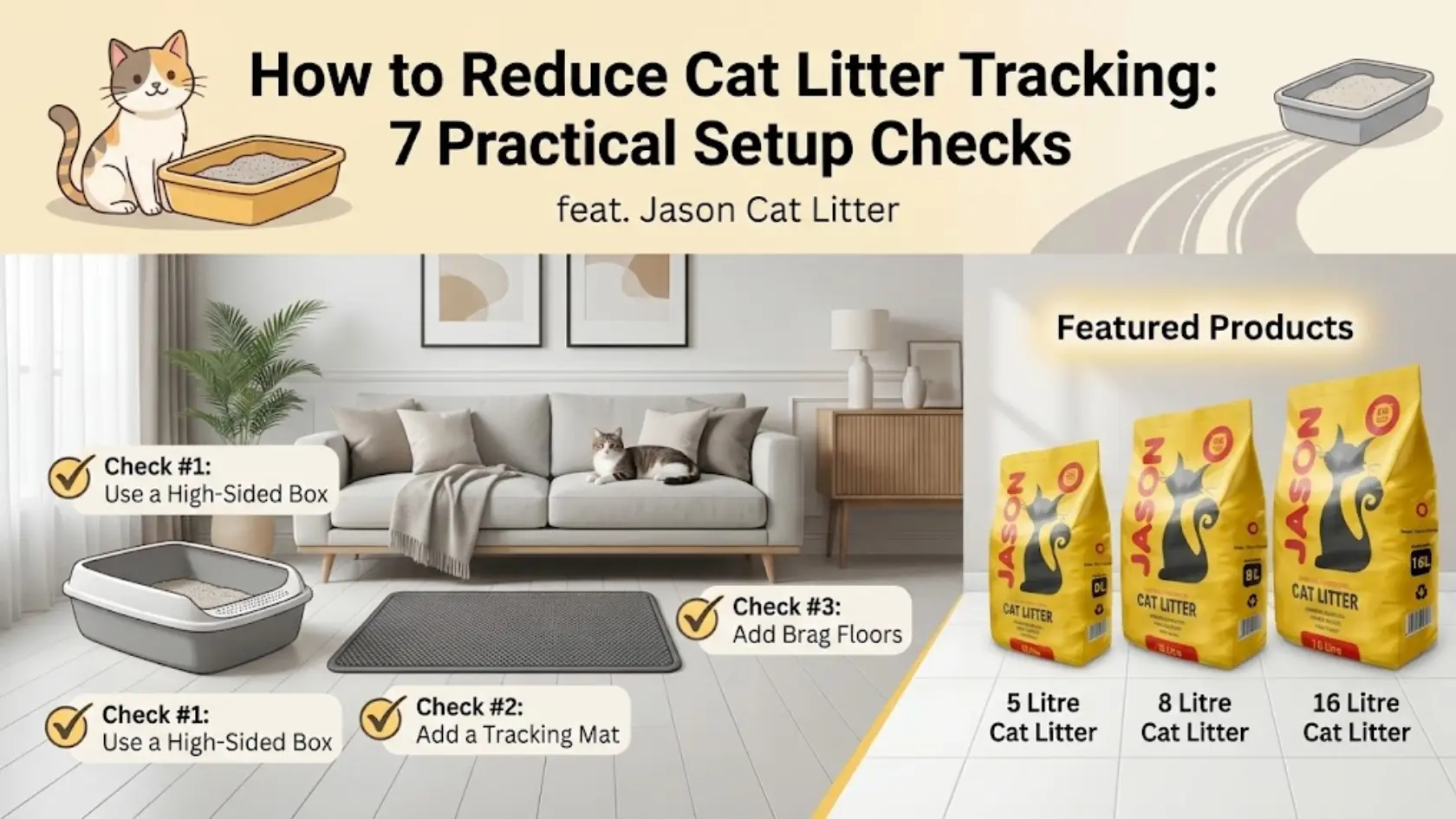
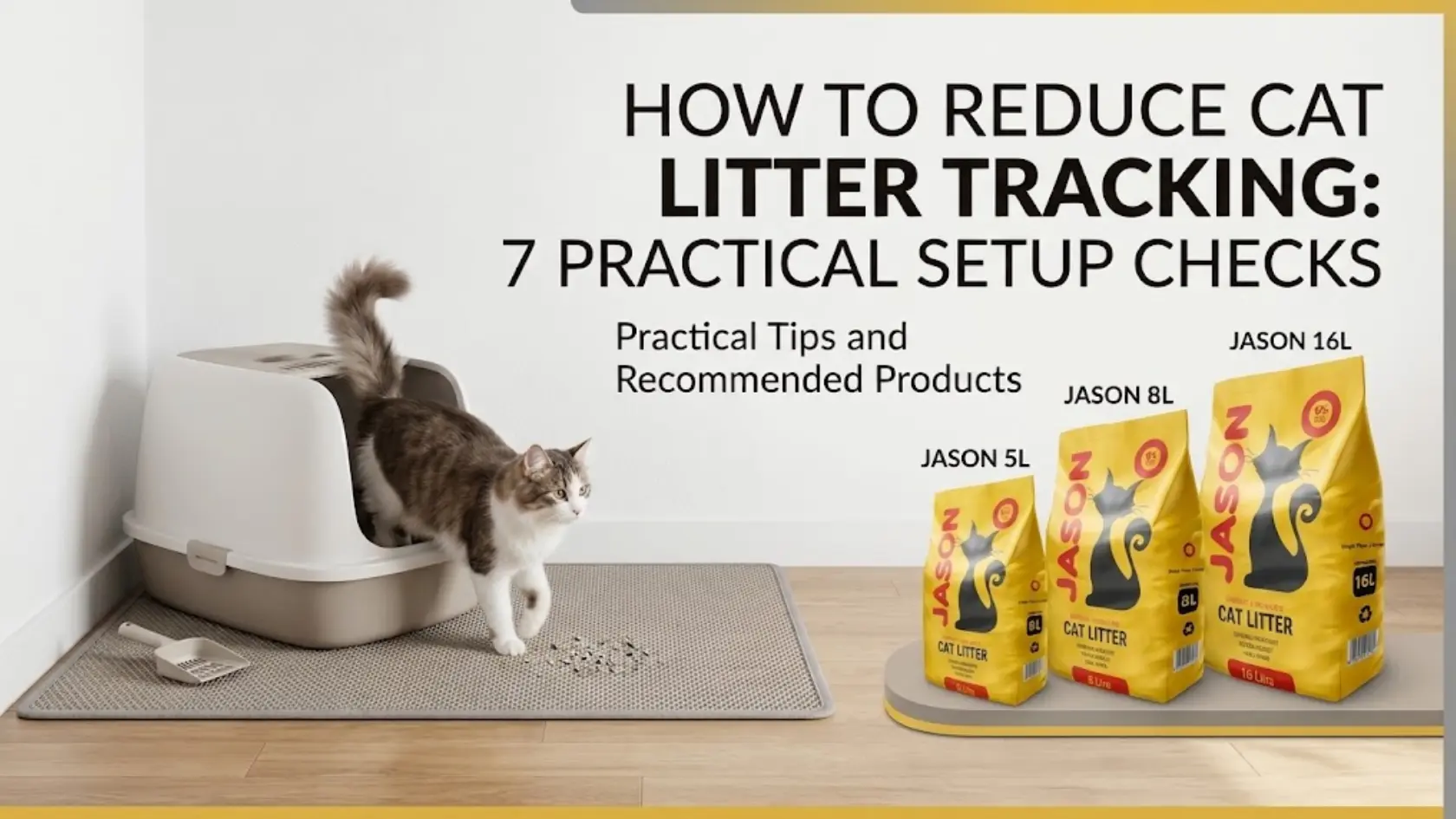
A litter mat catches granules from paws so litter is not tracked and crushed into floors and carpets, where it keeps smelling. Liners can make cleaning easier, but if your cat tears them, urine collects in the folds; skip liners in that case.
10. Feed a Good Diet and Keep Your Cat Hydrated
What goes in affects what comes out. Quality food and plenty of fresh water produce less pungent stool and more diluted urine. Wet food and a water fountain help cats that drink too little. Any sudden change in odor is worth checking with a vet (see the health section below).
What Is the Best Cat Litter for Odor Control?
The best cat litter for odor control is a clumping litter with high absorption, because it traps urine in a removable clump before ammonia can form. Look for low dust, fast clumping and no heavy perfumes that might put your cat off the box.
| Litter type | Odor control | Clumps | Best for |
| Clumping (bentonite clay) | Excellent when scooped daily | Yes, firm clumps | Most homes, multi-cat homes |
| Silica crystal | Very good absorption | No | Owners who change litter on a fixed schedule |
| Plant-based (wood, corn, tofu) | Good | Some brands | Eco-focused owners |
| Non-clumping clay | Fair; urine stays in the box | No | Budget use with frequent full changes |
JASON Cat Litter: Clumping Formulated for a Fresher Home
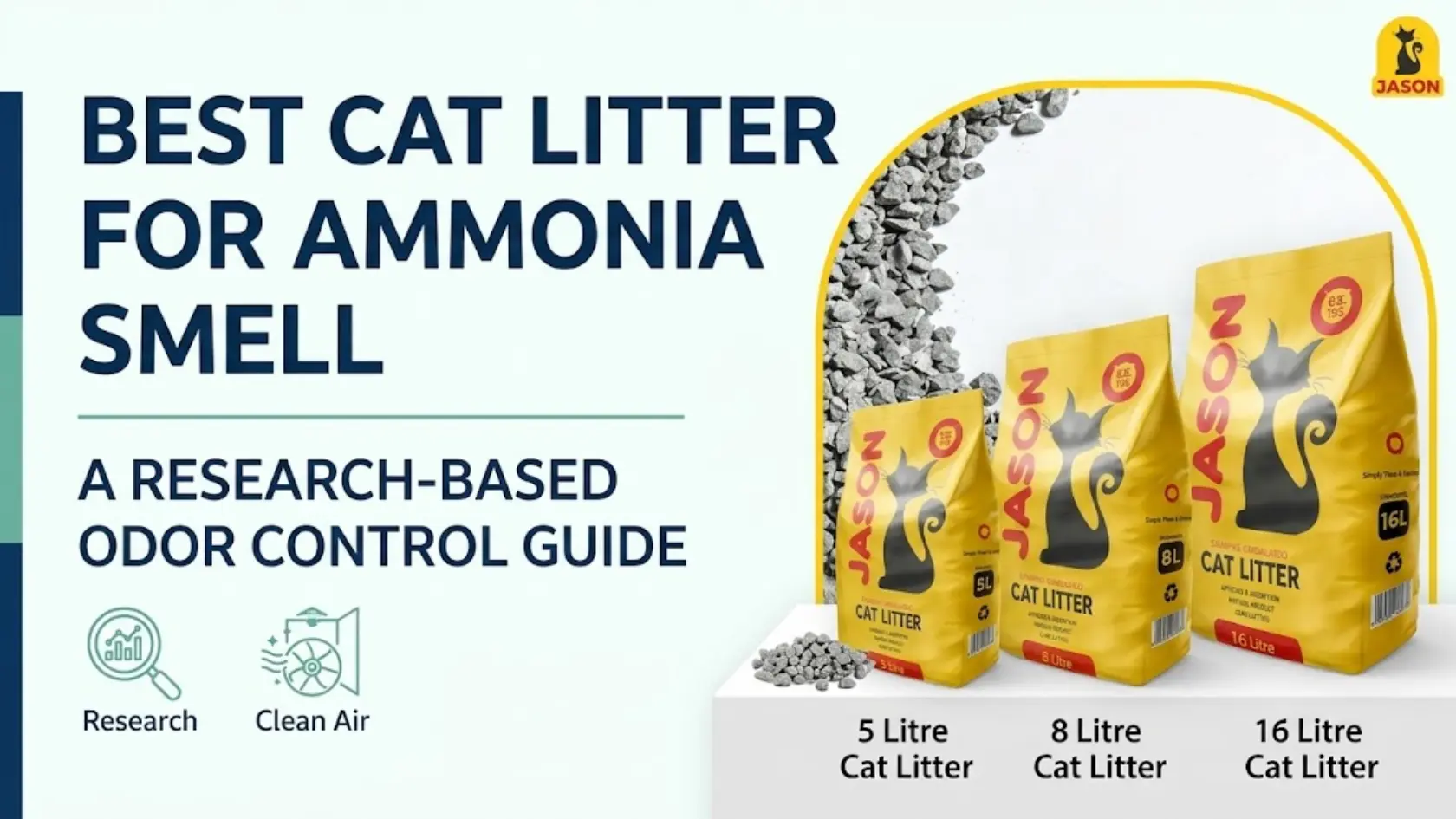
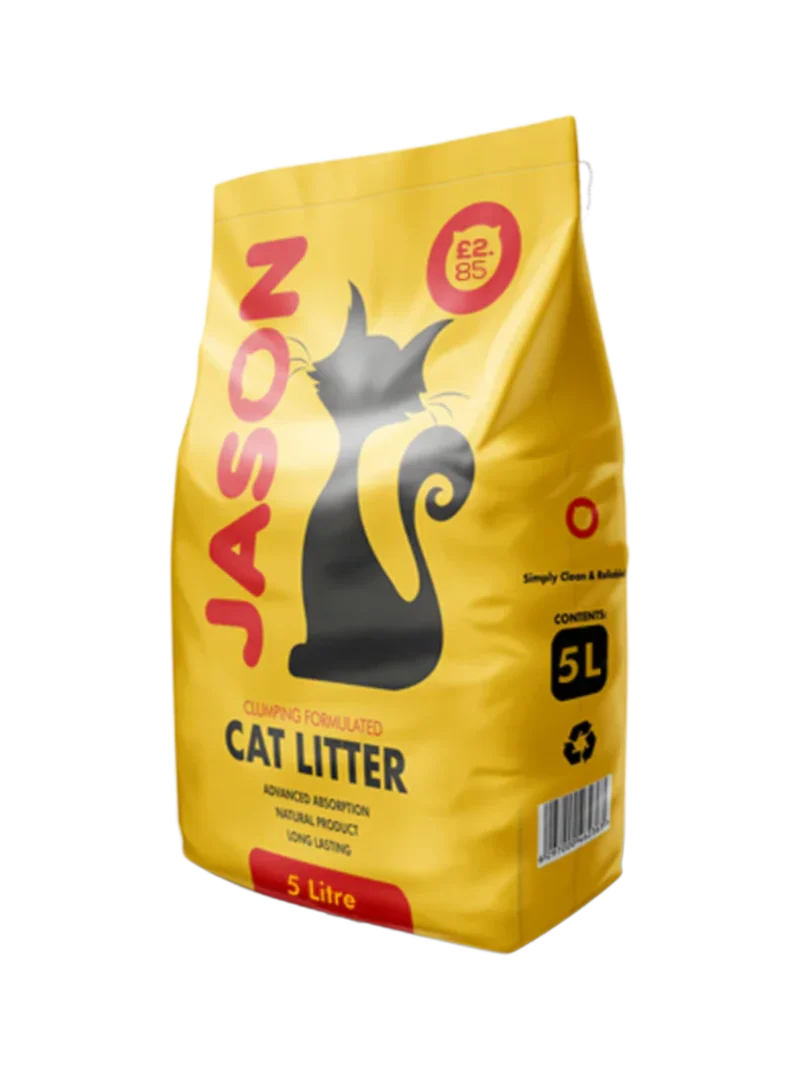
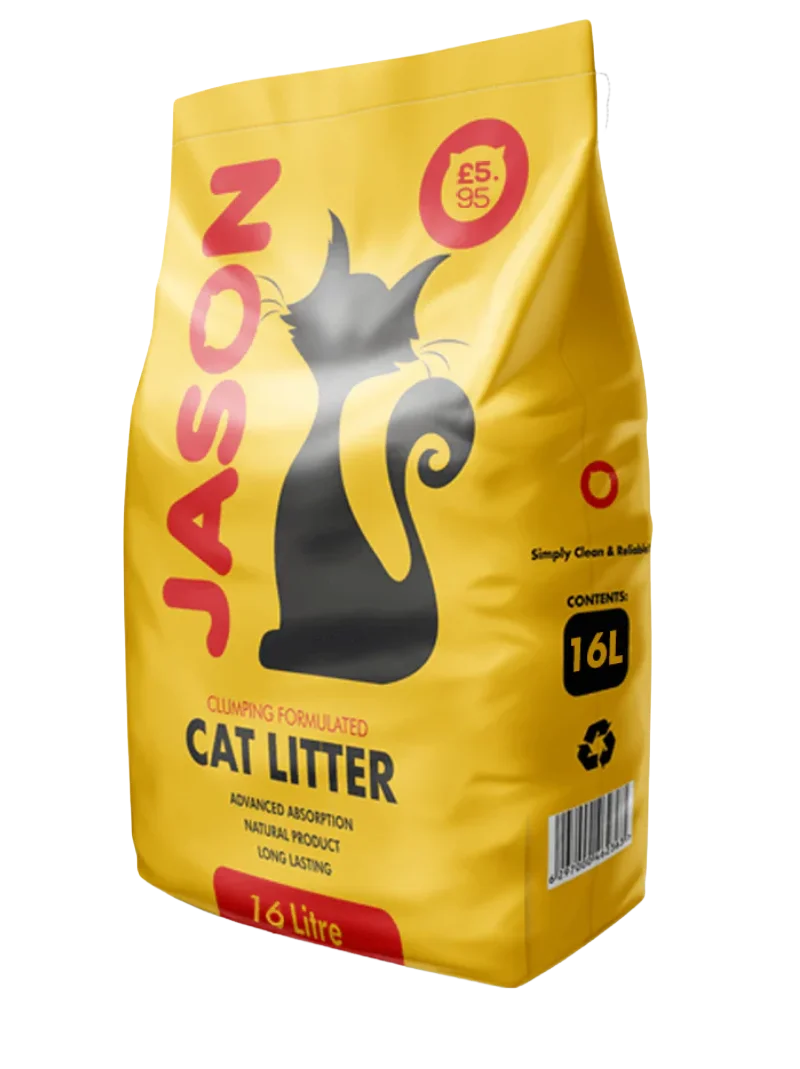
JASON cat litter is a clumping formulated cat litter with advanced absorption. It is a natural product made to be long lasting, so a little goes a long way between full changes. It comes in three sizes to suit single-cat and multi-cat homes:
| Product | Size | Price | Best for |
| JASON 5 Litre Cat Litter | 5 L | Rs. 1,000 PKR | One cat, or trying JASON for the first time |
| JASON 8 Litre Cat Litter | 8 L | Rs. 1,500 PKR | One to two cats, monthly top-ups |
| JASON 16 Litre Cat Litter | 16 L | Rs. 2,800 PKR | Multi-cat homes and best value per litre |
Tip: the 16 litre bag works out to about Rs. 175 per litre, compared with Rs. 200 for the 5 litre bag, so larger households save the most by buying bigger.
How to Switch to a New Litter Without Upsetting Your Cat
Mix about 25% JASON litter into the old litter for a few days, then 50%, then 75%, and finish with 100% after 7-10 days. A gradual switch keeps your cat comfortable and prevents accidents outside the box.
How Often Should You Clean a Litter Box?
Scoop a litter box every day, top up litter after scooping, and fully empty and wash it every 1-2 weeks with clumping litter (weekly with non-clumping litter). Multi-cat homes should scoop twice daily and deep clean weekly.
| Task | One cat | Two or more cats |
| Scoop clumps and feces | Once a day | Twice a day |
| Top up litter to 5-7 cm | After each scoop | After each scoop |
| Wipe rim and surrounding floor | Every 2-3 days | Daily |
| Empty, wash and refill box | Every 2 weeks | Every week |
| Wash or shake out litter mat | Weekly | Twice a week |
| Replace plastic box | Every 12 months | Every 6-12 months |
7 Mistakes That Make Litter Box Smell Worse
Most lingering litter box odor comes from habits that seem helpful but trap smell instead. Avoid these:
- Masking odor with air fresheners or scented sprays. They cover the smell briefly while ammonia keeps building, and strong perfumes can make cats avoid the box.
- Cleaning with bleach or ammonia products. Ammonia smells like urine to cats, and bleach fumes can irritate their airways.
- Topping up without scooping. Fresh litter on top hides old urine below, which keeps releasing ammonia.
- Using too little litter to save money. Shallow litter lets urine soak into the box. A long-lasting litter like JASON saves more over time than skimping does.
- Keeping the box in a closed, hot space. No airflow means odor concentrates and spreads to the rest of the room when the door opens.
- Relying on a covered box alone. Hoods trap smell inside for you but intensify it for your cat, who may then go elsewhere.
- Ignoring old, scratched boxes. Scratches hold bacteria that survive washing.
When a Smelly Litter Box Means Your Cat Needs a Vet
If the litter box suddenly smells much stronger even though your routine has not changed, the cause may be your cat's health rather than the litter. Contact a veterinarian if you notice any of the following:
- Urine with an unusually strong, sweet or fishy smell, which can point to a urinary tract infection, kidney disease or diabetes.
- Much larger or more frequent urine clumps than usual.
- Straining, crying in the box, or tiny clumps visited often. A male cat straining with little or no urine is an emergency.
- Blood in urine or stool.
- Diarrhea or very foul stool lasting more than a day or two.
- Urinating or defecating outside the box.
A clean, clumping litter makes these changes easier to spot, because you can see the size and number of clumps each day.
All Your Questions, Answered
Q1. How do I make my litter box not smell?
Scoop the litter box every day, use a high-absorption clumping litter such as JASON cat litter, keep litter 5-7 cm deep, and wash the box with mild unscented soap every 1-2 weeks. Place it somewhere ventilated and provide one box per cat plus one.
Q2. Why does my litter box smell even after cleaning?
A box that smells right after cleaning usually has scratches that trap bacteria, or urine has soaked into the plastic. Replace plastic boxes every 12 months. Also check that you are using enough litter and that the room has airflow. A sudden change in odor can signal a health issue.
Q3. What absorbs litter box odor naturally?
Plain baking soda absorbs litter box odor naturally when sprinkled thinly under the litter. Good ventilation, sunlight on the empty box after washing, and a natural clumping litter that traps urine quickly also help. Avoid scented powders, which cats often dislike.
Q4. Does clumping litter control odor better?
Yes. Clumping litter controls odor better because it binds urine into a solid clump you remove completely, so urine does not stay in the box and turn into ammonia. Non-clumping litter only absorbs, leaving urine in the box until the next full change.
Q5. How often should I change cat litter completely?
With clumping litter, change it completely every 1-2 weeks for one cat and weekly for multiple cats, while scooping daily. With non-clumping litter, change it every few days to once a week, because urine stays in the litter.
Q6. Where is the best place to put a litter box to reduce smell?
The best place is a quiet, well-ventilated area away from food and water, such as a utility room or a corner near a window or exhaust fan. Avoid closed cupboards and hot, damp bathrooms, where odor builds up quickly.
Q7. Is baking soda safe to put in cat litter?
Plain baking soda is generally considered safe in small amounts when sprinkled thinly under the litter. Use only a light layer, never scented versions, and stop if your cat avoids the box. Ask your vet first if your cat has health conditions.
Q8. How much litter should I put in a litter box?
Put 5-7 cm (2-3 inches) of litter in the box. This depth lets clumps form fully without urine reaching the bottom. For a standard box, a JASON 5 litre bag usually covers one fill with some left over for top-ups.
Q9. Do covered litter boxes stop the smell?
Covered litter boxes reduce how much smell reaches the room but do not remove it. They trap odor inside, which can make cats avoid the box. They work best combined with daily scooping and a good clumping litter.
Q10. Where can I buy JASON Cat Litter in Pakistan?
You can buy JASON cat litter online in 5 litre (Rs. 1,000), 8 litre (Rs. 1,500) and 16 litre (Rs. 2,800) bags from the JASON cat litter collection. Choose the 16 litre bag for multi-cat homes and the best value per litre.
Conclusion: A Fresh Litter Box Is a Simple Routine
A litter box stops stinking when urine and feces leave it quickly and the box stays clean and dry. Scoop daily, keep 5-7 cm of a high-absorption clumping litter, deep clean every 1-2 weeks, replace old boxes yearly and give the box fresh air. If odor changes suddenly, check with your vet. Get these basics right and your home, your guests and your cat will all notice the difference.
Ready for a Fresher Home? Try JASON Cat Litter
JASON cat litter is clumping formulated with advanced absorption to lock in odor, made as a natural, long-lasting product for everyday use. Pick the size that fits your home:
- Shop JASON 5 Litre Cat Litter - Rs. 1,000
- Shop JASON 8 Litre Cat Litter - Rs. 1,500
- Shop JASON 16 Litre Cat Litter - Rs. 2,800 (best value)