
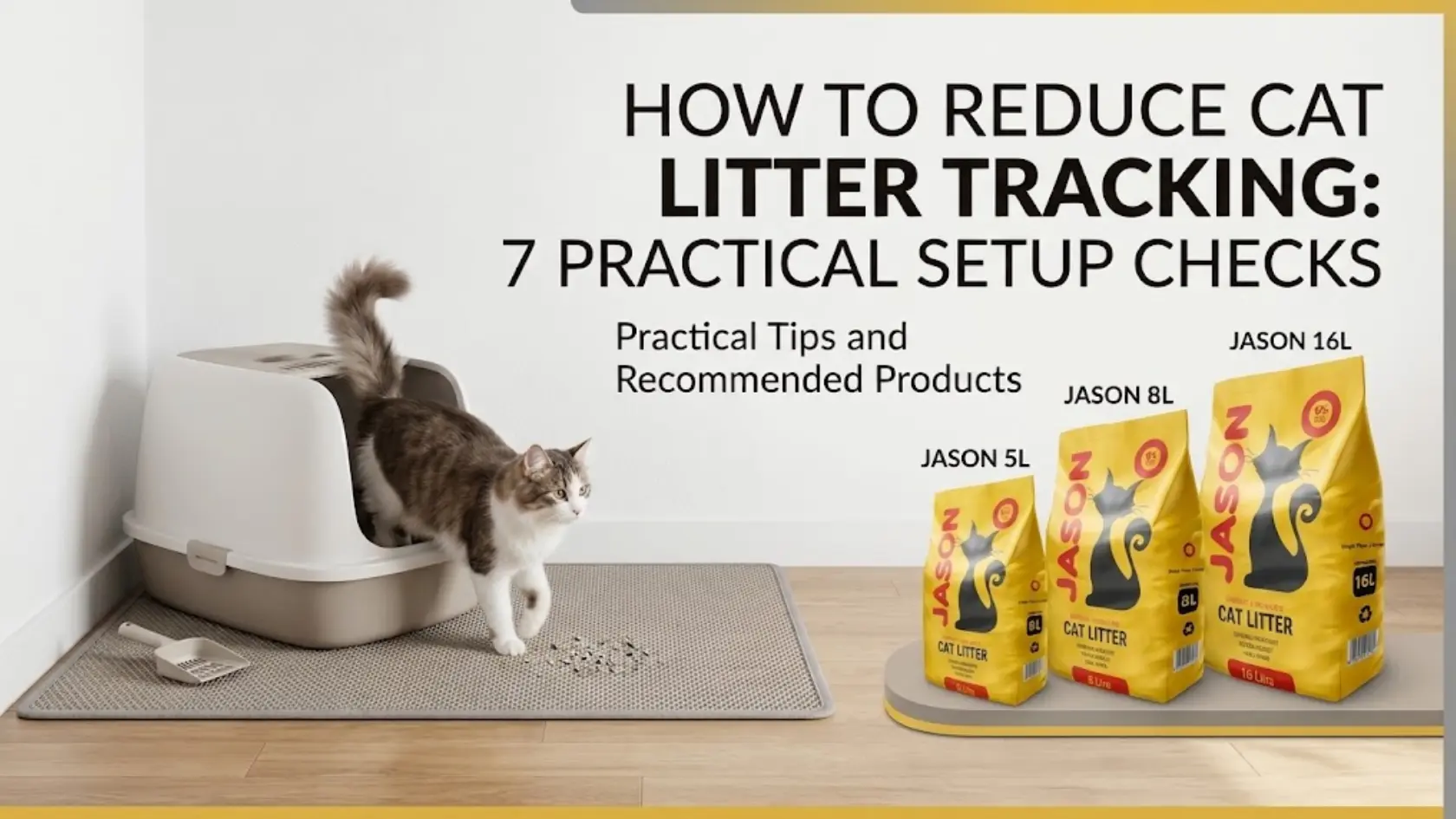
How Do You Reduce Cat Litter Tracking?
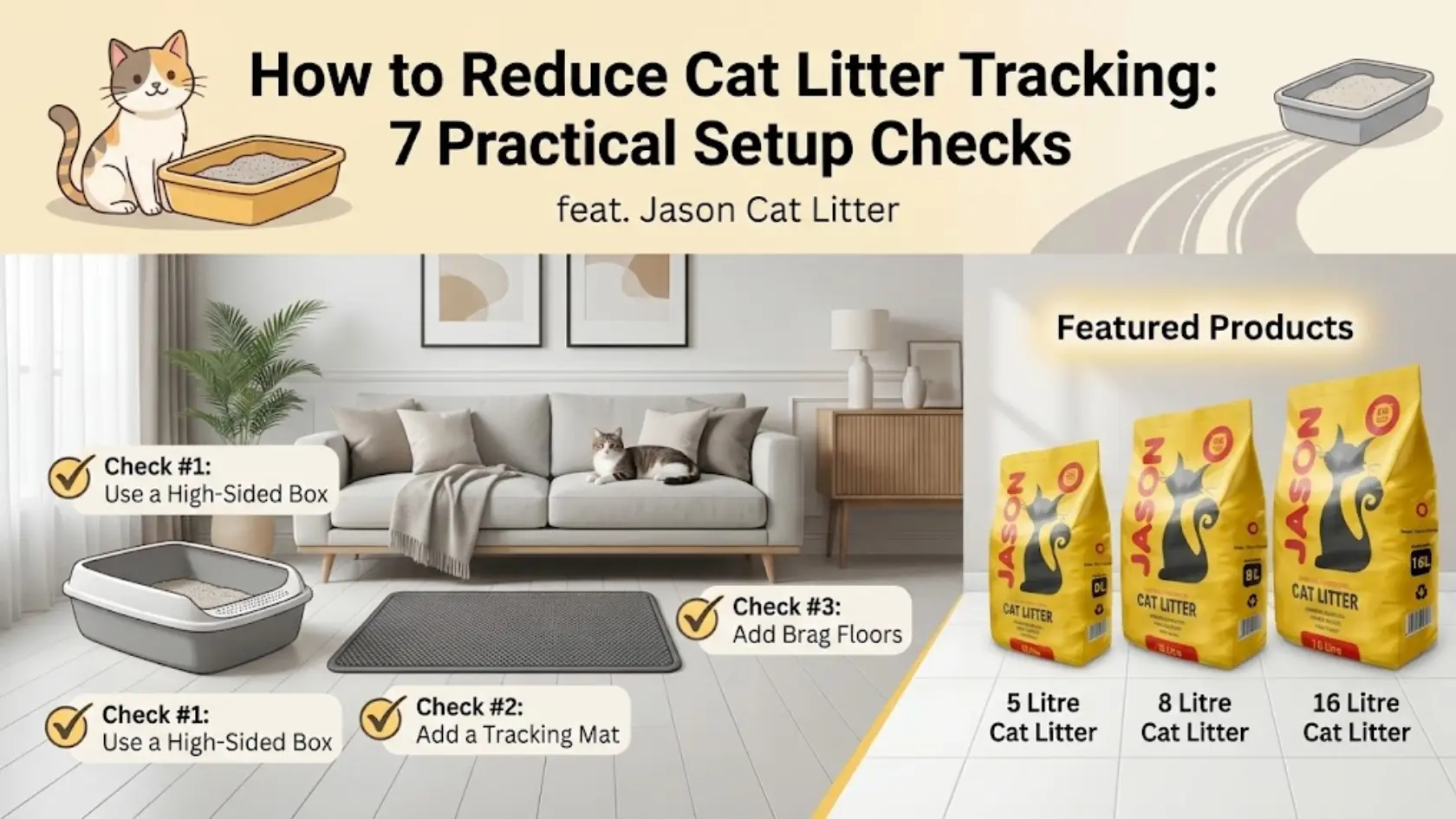
To reduce cat litter tracking, check seven things: use a box at least 1.5 times your cat's length, keep litter 5-7 cm deep, choose a heavier clumping litter, place a large textured mat at the exit, position the box away from carpet and walkways, trim long paw fur, and scoop daily. Most homes see the biggest improvement from the mat, the litter type and the box size.
Litter tracking is when granules stick to your cat's paws and fur, then get carried out of the litter box and across your floors. It is one of the most common complaints from cat owners, and it is almost always a setup problem rather than a cat problem.
At JASON, we make clumping cat litter for UK homes, and the question we hear most is simple: "Why is there litter all over my floor?" This guide walks through the seven practical setup checks we recommend, in the order that usually makes the biggest difference. Each check takes minutes, and most cost little or nothing.
In this guide:
- Why cats track litter in the first place
- The 7 setup checks, step by step
- A quick comparison of fixes by cost and impact
- Which JASON cat litter size suits your home
- Answers to the most common questions about litter tracking
Why Do Cats Track Litter Out of the Box?
Cats track litter because granules lodge between their toes and in the fur around their paw pads, then fall off as they walk away. Digging and burying waste is natural, healthy behaviour, so the goal is never to stop it, only to catch the litter before it travels.
The main causes are:
- Granule size and weight: fine, light or dusty granules cling to paws and static-charged fur more easily than heavier ones.
- Box size: a cramped box forces cats to perch on the edge or jump out quickly, flicking litter as they go.
- Litter depth: too much litter gets kicked over the rim; too little makes cats dig harder.
- No landing zone: without a mat, the first few steps after the box drop granules straight onto the floor.
- Long-haired or fluffy paws: breeds such as Maine Coons, Persians and Norwegian Forest Cats carry more litter in their toe tufts.
- Dirty litter: cats avoid soiled areas, step around clumps and spend more time scratching at clean edges.
Tracking can also be a clue. If your cat suddenly starts jumping out of the box fast, or avoids standing in the litter, it may dislike the texture, the smell or the location. A sudden change in toilet habits is worth discussing with your vet, as it can signal discomfort or a urinary problem.
7 Practical Setup Checks to Reduce Cat Litter Tracking
Work through these checks in order. Each one removes a different way litter escapes, and together they cover almost every cause of tracking.
Check 1: Is the Litter Box Big Enough?
A litter box should be at least 1.5 times the length of your cat, measured from nose to the base of the tail. In a box that size, your cat can turn, dig and step out calmly instead of leaping over the rim.
- Measure your cat, then compare it with the inside floor of the box, not the outer dimensions.
- Choose a box with high sides (around 15 cm or more) or a raised back and sides to stop litter being flicked out.
- For kittens, older cats or cats with arthritis, keep one low entry point so getting in stays easy.
Quick test: if your cat's tail or back paws hang over the edge while it squats, the box is too small.
Check 2: Is the Litter at the Right Depth?
For most clumping litters, a depth of 5-7 cm (about 2-3 inches) is right. This is deep enough for cats to dig and bury, but shallow enough that kicked litter stays in the box.
- Too deep (over 8 cm): litter spills over the rim and sticks to legs.
- Too shallow (under 4 cm): cats dig harder and urine reaches the tray floor, so clumps break apart.
- Top up little and often after scooping, rather than refilling the whole tray at once.
Check 3: Are You Using a Low-Tracking, Clumping Litter?
Litter type has a big effect on tracking. Heavier granules with a consistent size fall back off paws more easily than fine, powdery or very light litters.
Look for:
- Clumping formula: waste forms firm clumps you can lift out whole, leaving fewer loose, damp granules to stick to paws.
- Good absorption: dry litter tracks less than damp litter, because moisture makes granules cling to fur.
- Low dust: dust coats paws and fur and settles on floors around the box.
JASON cat litter is clumping formulated, with advanced absorption, and is described on pack as a natural, long-lasting product. Its firm clumps lift out cleanly, which keeps the rest of the tray dry and less likely to be carried out on paws. If you switch litters, mix the new one into the old over about a week so your cat accepts the change.
Check 4: Is There a Litter Mat at the Exit?
A litter mat is the single cheapest fix for tracking. It catches granules in the first two or three steps your cat takes after leaving the box.
- Choose a mat that extends at least 30-45 cm beyond the box entrance, so your cat takes several steps on it.
- Textured, honeycomb or ridged mats trap granules better than flat rugs or towels.
- Pick a mat that is soft on paws; cats will step around a mat that feels uncomfortable.
- Shake or vacuum the mat every day or two, or it will start shedding litter itself.
Check 5: Is the Box in the Right Place?
Where you put the box decides where tracked litter ends up. A good location keeps your cat relaxed and stops granules reaching high-traffic areas.
- Place the box on hard flooring (tile, vinyl or laminate), not carpet, so stray litter is easy to sweep.
- Keep it out of hallways and busy walkways, and away from noisy appliances such as washing machines.
- Leave space in front of the exit for the mat.
- Try placing the box in a corner or an alcove, so litter can only escape from one side.
- In multi-cat homes, follow the common guideline of one box per cat plus one extra, spread across different rooms.
Check 6: Do Your Cat's Paws Need Trimming?
Long fur between the toes acts like a brush that collects litter. Gently trimming the tufts around the paw pads can cut tracking noticeably for long-haired cats.
- Use round-ended grooming scissors and trim only the fur level with the pads.
- Wipe paws with a soft, damp cloth if your cat tolerates it.
- If your cat is anxious about handling, ask your vet or a professional groomer to help.
Check 7: Are You Scooping and Topping Up Often Enough?
A clean tray means less tracking. Cats step carefully around soiled patches, which pushes them to the edges and makes them leave in a hurry.
- Scoop clumps at least once a day, and twice a day in multi-cat homes.
- Top up to keep the depth at 5-7 cm after each scoop.
- Fully empty, wash with mild unscented soap and refill the tray every 2-4 weeks, depending on how many cats use it.
- Sweep or vacuum around the box daily so stray granules are not walked further into the home.
Which Litter Tracking Fixes Work Best?
The fastest wins are a textured mat, the right litter and a correctly sized box. Use this table to prioritise.
| Setup check | Cost | Effort | Impact on tracking |
| 4. Textured litter mat | Low | One-off | High |
| 3. Clumping, low-dust litter | Low | One-off switch | High |
| 1. Larger, high-sided box | Medium | One-off | High |
| 2. Correct litter depth (5-7 cm) | Free | Ongoing | Medium |
| 7. Daily scooping and top-ups | Free | Daily | Medium |
| 5. Box on hard floor, in a corner | Free | One-off | Medium |
| 6. Trimming paw fur | Free | Monthly | Medium (high for long-haired cats) |
Which JASON Cat Litter Size Is Right for You?
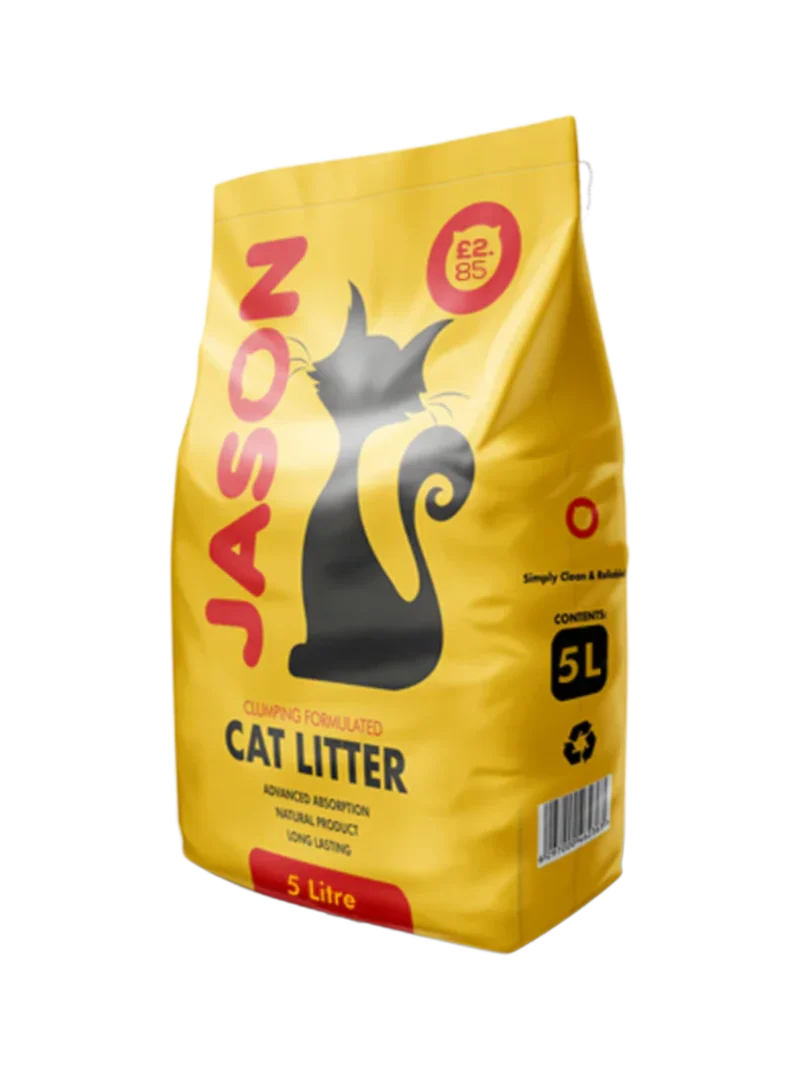
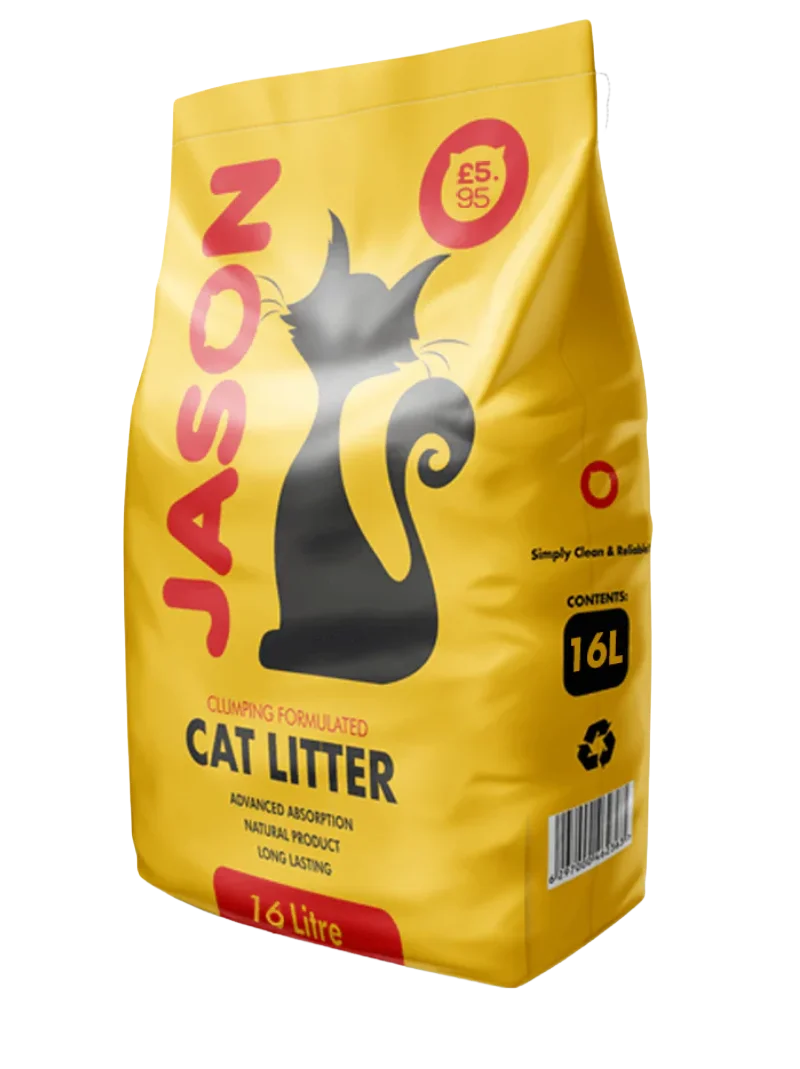
JASON cat litter comes in three sizes, all with the same clumping, advanced-absorption formula. Choose by how many cats you have and how often you want to restock.
| Pack | Best for | Why choose it |
| JASON 5 Litre Cat Litter | One cat, kittens, trying JASON for the first time | Light, easy to carry and store; ideal for smaller trays |
| JASON 8 Litre Cat Litter | One or two cats, regular top-ups | A balance of value and convenience for most homes |
| JASON 16 Litre Cat Litter | Multi-cat homes, large or multiple trays | Best for keeping several boxes at the right depth with fewer trips |
Tip: a standard tray at 5-7 cm deep holds several litres of litter, so if you run two or more boxes, the 16 litre pack makes it easier to keep every tray topped up, which is one of the simplest ways to reduce tracking.
Have Questions?
Q1. Why does my cat track litter everywhere?
Your cat tracks litter because granules get caught between its toes and in its paw fur, then drop off as it walks. Small or dusty granules, a cramped box, litter that is too deep and the lack of a mat are the most common causes.
Q2. What is the best way to stop cat litter tracking?
The best way is to combine a textured litter mat, a heavier clumping litter and a box at least 1.5 times your cat's length. Together, these three changes catch most stray granules before they leave the litter area.
Q3. How deep should cat litter be to reduce tracking?
Keep clumping cat litter 5-7 cm (2-3 inches) deep. Deeper litter gets kicked over the rim, while shallower litter makes cats dig harder and lets clumps break apart.
Q4. Does clumping litter track less?
Good clumping litter usually tracks less because waste forms solid clumps you remove whole, leaving the rest of the tray dry. Dry, consistent granules are less likely to stick to paws than damp or broken-down litter.
Q5. Do covered or top-entry litter boxes reduce tracking?
Yes, covered and top-entry boxes can reduce litter scatter, because walls contain kicked litter and a top exit knocks granules off paws. However, some cats dislike enclosed boxes, so offer one alongside an open box first and watch which your cat uses.
Q6. Do litter mats actually work?
Yes. A textured or honeycomb mat that extends 30-45 cm beyond the box entrance catches litter from the first few steps your cat takes. Empty it every day or two so it keeps working.
Q7. Why has my cat suddenly started tracking more litter?
A sudden increase can follow a change of litter, box or location, or longer paw fur. If your cat is also straining, going more often or toileting outside the box, contact your vet, as these can be signs of a health problem.
Q8. How often should I clean the litter box to reduce tracking?
Scoop at least once a day, top up to the correct depth, and fully empty and wash the tray every 2-4 weeks. A clean box encourages your cat to step and dig calmly in the centre, which keeps litter inside.
Q9. Is JASON Cat Litter good for reducing tracking?
JASON cat litter is clumping formulated with advanced absorption, so clumps lift out cleanly and the remaining litter stays dry. Used with a mat and the correct depth, it supports a tidier, low-tracking setup. It is available in 5 litre, 8 litre and 16 litre packs.
Conclusion: A Tidier Litter Area in Seven Checks
Cat litter tracking is a setup problem with simple fixes. Start with the three high-impact changes: a textured mat at the exit, a clumping, low-dust litter and a box at least 1.5 times your cat's length. Then fine-tune with the right depth (5-7 cm), a hard-floor corner location, trimmed paw fur and daily scooping.
Make one or two changes at a time and watch how your cat responds. A comfortable, clean box keeps your cat happy, and a happy cat digs calmly and leaves less litter behind.
Ready for a Cleaner Floor? Try JASON Cat Litter
JASON cat litter is clumping formulated with advanced absorption, so clumps lift out cleanly and your tray stays fresher for longer. Choose the size that suits your home:
- JASON 5 Litre Cat Litter for single-cat homes and first-time buyers
- JASON 8 Litre Cat Litter for regular top-ups
- JASON 16 Litre Cat Litter for multi-cat homes
Shop JASON products now and give your floors a break.